by Giselle Renarde
I've got a bit of crush on this real estate agent in my neighbourhood. Every so often I get a newsletter from her. In the mail. An actual newsletter on paper. Glossy paper. With lots of pretty pictures.
I always read her newsletters, even though I probably couldn't afford even the cheapest property in the entire city. I doubt if I could afford a parking spot. Not that I need one--I don't have a car. But if I did suddenly have 3 million dollars at my disposal and I wanted to buy a house, I know exactly who I'd call.
And not just because she's pretty. She is pretty, no mistaking it, but that's not why I read her newsletters. I read them because they're about HER. Yes, she writes about the real estate market in Toronto, but she's also written some pieces that unveiled her vulnerabilities--something you don't expect from anyone in business, much less a woman working in a cut-throat industry.
The reason I'm telling you about this real estate agent and her very engaging newsletter during "What Am I Reading?" week is that her most recent newsletter included a list of books she'd read recently and found interesting and helpful, particularly from a business perspective.
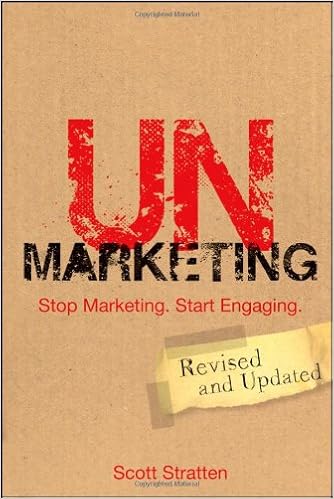
By some strange coincidence, I had found a copy of this book just a few weeks earlier in a Little Free Library. When I told my mom this story, she said, "I bet that's your real estate agent's copy!" The awful wishful thinking thing is that I'd already had that thought. Hey, anything's possible.
What did I learn from UnMarketing?
Well, I'll start by saying it's an amusing book written in a very approachable tone. I breezed through it, and I am not a fast reader. The title (or, rather, the subtitle) is a very accurate description of the overall message. It's a book about connecting with your audience rather than just spewing advertisements at them, with a primary focus on social media (mainly Twitter).
Thing is, any book you write about social media marketing is obsolete before it even hits the market. And the "Revised and Updated" version I read came out in 2012.
The same thing happens to me pretty much every time I read a marketing book: I read the advice, think "yeah, I know I SHOULD be doing all these things, but I'm not gonna," and I never implement anything I've learned.
My Twitter account has been around since 2008 and I've made good use of it, more for socializing than for marketing, but if a new book comes out I try to remember to mention it to my followers. I guess my problem is that the people with whom I socialize on Twitter are people I already know. They're the authors and editors I've known for years.
Any time anyone I don't know @'s me, I freak the fuck out. I am so intimidated by strangers it isn't even funny. If I see a tweet from someone I don't know, I basically close my eyes and chant "Make it go away!" a hundred times, then close my browser.
I'm scared of people. Even well-meaning people who tweet totally innocent stuff at me. I don't know who you are! I don't know what you want! Why are you talking to me?
All my life I've had a reputation for being a snob. My girlfriend says she found me standoffish when we first met. And I'm not surprised! It takes a ridiculous amount of time to earn my trust. What feels to me like scaredy-catness is interpreted by others as everything from aloofness to arrogance.
That's all well and good for your average human, but I'm an author. Perceived arrogance is bad for business. Should I force myself to be better for the good of the brand?
In my real estate agent crush's most recent newsletter, she talks about being inspired by Shonda Rhimes's book Year of Yes to push herself beyond her comfort zone. She says she'd always been really reluctant to do videos even though her business coach had encouraged her to just try it. She took an improv class to get comfortable talking on the fly, tried out videos, and soon she was being contacted by news channels for on-air interviews.
Aren't success stories heartwarming?
They sure are. I don't know what's wrong with me--a fundamental failing or character flaw--but I think I'd rather hear other people's success stories than work to create my own. That or I just have audacity to be satisfied with my little author life in my little author apartment.
Really, it ain't so bad.


