Showing posts with label creativity. Show all posts

Saturday, November 9, 2019

Rescuing the Phantom

One of my favourite novels of rescue is Phantom of the Opera.I read Gaston Leroux’s novel long before I saw the wonderful musical. I found all the old movies based loosely, very loosely, on the book missed the point entirely. While Phantom of the Opera weaves together our worst nightmares so tightly with our deepest hopes and wildest dreams that it’s impossible to pick the threads apart, ultimately, it is the story of rescue and redemption. 


I think stories in mythology about seduction of mortal women by the gods are really stories of inspiration. What better description of inspiration than divine seduction. But sometimes, occasionally, they are twisted and turned in such a way that the heroine is more than just a victim of a horny god. The story of Psyche and Eros is an example. Ultimately Psyche is brave enough to rescue herself, with a little help from the gods. That doesn’t happen very often.

Leroux’s Phantom of the Operatwists that plot even further. There is no help from the gods, and the hero is not the dashing young viscount from Christine’s past. The god in the story is not irresistibly beautiful, but horribly disfigured. He knows the soul of an artist, and he knows the real seduction is in offering a deeper understanding, a deeper mastery of her gift, and the lovely Christine is willingly to accept what her Angel of Music offers. The Phantom’s darkness is the balance to Christine’s light, and his music of the night allows her true gift to shine. Through it all, Raul, the viscount, is clueless, convinced that he can keep Christine safe. But Christine knows the darkness now. She’s seen it, embraced it, and a part of her loves it, longs for it. Her seduction by the music of the night has a chilling price that the whole story revolves around. In the end there is no sword battle, no cunning tricks, no magic wand. In the end there is simply a kiss, far more devastating than the sharpest blade. Compassion and acceptance does what muscle and gunpowder cannot.

I still get shivers when I read the descriptions of the Phantom’s lair and the dark lake under the opera house, when I revisit the terrifying scene in the graveyard. Yet throughout the whole of the book I felt an ache for the Phantom that was much more about seduction than pity. Phantom of the Operais a compelling, beautifully woven mix of fear and awe and raw desire for a man who is so much more than human. But though his actions tell us he is a monster, he compels the reader to desire him, and we long for him and Christine to be together, for all wounds to be healed. We long for the happy ever after. 


But there can be none. Instead, the happy-ever-after is gifted to Raul. He is to claim what the Phantom has nurtured and longed for but can never have. It is Christine, however, who earns that gift for Raul by being willing to pay the price for his life. There is no doubt she is the hero of this story. She is the goddess hidden, then revealed only at the end when a choice must be made between the death of Raul and Christine’s submitting willingly to life with the Phantom. She not only chooses, but she chooses unconditionally, unreservedly to love the Phantom, to understand him, in as much as it’s possible to understand such tortured genius. She is the true giver of the gift in this story. She restores the balance. Just as the Phantom’s darkness has infused her gift with the music of the night, her light heals him, enabling him to let go of that which he knows does not now, nor has it ever belonged to him, the gift and the possessor of that gift.

And what does that have to do with inspiration? In the Greek stories and myths, it takes time for the magical child to be born and trained up to fulfil the task for which he was conceived, and it is usually a he. In Leroux’s story, we aren’t told how long Christine has been studying with her ‘Angel of Music,’ but it is clearly enough to make her singing enthralling to anyone who listens.

I think Phantom of the Opera is a story of the compelling seduction of the creative force. It is inspiration and hard work moving through the fear to restore balance, and coming out on the other side to places we never could have imagined. Then it’s repeating the whole process over and over again. Inspiration is rescuing the phantom in each of us, redeeming the darkness and overcoming the fear. 

Is this what Leroux wanted his story to convey? I don’t know, but I do know that the sensuality, the deep driving hunger coupled with the fear of moving past the point of no return is something every writer encounters. Our story, my story is about overcoming our fears and rescuing our phantoms. That’s not just the hero’s journey or the writer’s journey, that’s the journey of every person. 

What we create, what we bring forth is the result of passion leading us down into the depths of ourselves, the results of seducing ourselves in ways that terrify us as much as they attract us. We are changed by that passion, by that deep connection with what inspires us. Innocence is lost and something totally new is created out of our fears, and we are inspired to move forward and to face unconditionally what comes next.


Monday, August 13, 2018

A Dancing Star - #chaos #creativity #insanity


By Lisabet Sarai
 
One must still have chaos in oneself to be able to give birth to a dancing star. ~ Friedrich Nietzsche, Thus Spake Zarathustra

I’d never heard this quote before yesterday, when my husband ran across it in a book he was reading (a collection of plays by Strindberg). Taking it out of context, I interpreted it as a statement about creativity. Artists must trample comfort, eschew order, conquer fear, embrace the whirling terror of a universe without rules or logic in order to create work that is truly great. This is, at least, a common belief—that suffering, even insanity, is the font from which flows transcendent, timeless music, painting, poetry or fiction.

One can easily cite examples. Vincent Van Gogh. Sylvia Plath. Edgar Allan Poe. Robert Schumann. Wolfgang Amadeus Mozart. Wikipedia has a category list of more than 200 writers who committed suicide.

The conceit that one must suffer for one’s art has always bothered me, mostly because I haven’t, much. Suffered, I mean. Aside from my half-decade struggle with anorexia, I have mostly lived a healthy, productive and comfortable, if not completely conventional, life. Furthermore, I can’t really see much of a relationship between the times when I have been suffering and my creative output. I’ve been writing since I was six or seven years old, both fiction and poetry, roughly six decades. I actually wrote less during the period when I was an inmate in the state psychiatric hospital (though I did do a lot of drawing).

If the theory that chaos triggers creativity is true, what does that say about me? Well, I understand that my work is not exactly “timeless”. Still, I believe that I’ve produced few transcendent stories and poems, without (as far as I can tell) the assistance of chaos.

And I have to admit, I don’t like chaos (not nearly as much as my husband does). I have a fairly low tolerance for ambiguity. I’m not obsessive or anything, but I get pleasure out of having some organization and order in my environment.

Perhaps I’m simply shallow, wallowing in self-delusion when I call myself a writer.

Then I remember all the other great artists who produced incredible masterpieces without going insane, committing suicide or nearly starving due to their poverty. Bach, for instance. Or Michaelangelo. Or William Shakespeare.

Still I wonder whether one can have chaos within, while appearing to be comfortable and in control. This thought leads to another: if this were true, would you even recognize that chaos? Or would you simply assume that the wild, crazy, thrilling, horrifying ideas that swirl around in your head are normal?

Perhaps I can give birth to stars after all.


Thursday, May 10, 2018

Every Book Needs Readers

by Giselle Renarde


Last year, I talked about filling The Well of Creativity with every kind of media I can get my face on.

At that time, I viewed myself as a dry well. I've shifted a touch, to view myself as a fallow field. A healthier outlook, I hope.

We all need to rest once in a while. I used to be obsessed with the Andrew Lloyd Webber musical Aspects of Love. One of the first lines in the show is: "I'm resting again--that's what actresses say when they're not in a play." Am I resting because I'm not writing? Or am I not writing because I'm resting? Either way, I'm not in a play.

Most writers are readers first. Reading is important to fill The Well. Watching movies, TV, plays, listening to audiobooks and Andrew Lloyd Webber musicals--it all helps us to be better writers. But I covered that last time.

I'm revisiting the importance of reading (and watching and listening) because a new thought occurred to me the other day, another reason it's so important to be a voracious consumer of media:

Every Book Needs Readers

Before, I was thinking about the benefits of reading to me, as a creative writer and human person. Now, I'm thinking about the benefits of reading to the author of that book, and even to the book itself.

One of the reasons my will to write has dwindled is that there are far fewer eyes on my words than there used to be. Or at least it feels that way. Every time a reader picks up a story I wrote, a novel or an anthology or short, that's huge for me. Every sale is a big deal, but it's not even about the sale. I put so much time and energy, so much of myself, into everything I write. I want eyes on those words.

So now, every time I read a book, I imagine how pleased the author must be that their words are being read. Kind of silly, I know. They're probably so successful that one more set of eyes makes no difference to them. But maybe readers think that about me. After all, I'm a full-time writer. I've been doing this job for more than a decade. Maybe readers consider me established.

I hope they know how much it means to me when they consume my words. Every book I write needs readers. If my words aren't read, what's the point in writing them?

I used to think of reading as part of my ongoing author education. And it is. But lately, I've considered it more of an imperative. I'm particularly drawn toward books that are out of print, stories that aren't online, aren't available on Amazon, aren't ebooks. Yellowed paperbacks that will cease to exist once these few copies have come apart. They're on their last legs.

Every book needs readers. Doesn't matter what you're reading, as long as you're reading. But, for me, those yellowed finds are the ones I want to read... before they disappear forever.

https://www.smashwords.com/books/view/823770
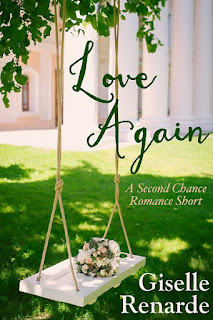
Oh, and if you're reading these words before Mother's Day (Sunday May 13th) 2018, I just want you to know you can read some of my words for free. Years ago, I wrote a sweet romance called LOVE AGAIN. It's a second chance romance about older adults finding each other nearly 40 years after high school. Anyway, it's newly re-issued and free from certain vendors at the moment. I'd love for you to have a copy. More words to read!

Thursday, October 12, 2017

The Well It Draineth Every Day

by Giselle Renarde


When I was in my final year of high school, one of my assignments for English class was to read a novel from the Canadian literary canon and give a one-on-one oral report about it.  I'm not sure why, but instead of presenting that report to my teacher, we students presented to the school librarian. I'd never met the woman before. To say we had little rapport would be a drastic understatement.

I was an overachiever and I got excellent grades. Most teachers liked me.  This woman clearly did not.  That, or she just wore that sour expression constantly and treated everyone like dirt. I don't know.  I don't know her life.

The book I read was The Diviners by Margaret Laurence. Do I remember anything about it? Nope! Not a thing. But I do remember my oral report.  I talked about drawing from the well of creativity. What do Diviners seek but water? They figure out where exactly to tap the earth so we'll hit pay dirt rather than come up dry.

Speaking of dry, that was the look the librarian gave me throughout my entire report. Her face basically said: "You have GOT to be kidding me with this New Age crap!" And the grade she gave me certainly reflected her lack of enthusiasm for my thoughts on Margaret Laurence's novel.

And, hey, maybe I did get it completely wrong. Hard to say. I tend to believe that most opinions about literary fiction are valid, and that our interpretations of literature actually say far more about us as readers than about the book itself.

I've been thinking about the artistic well a lot lately.  I've always believed that, if you're doing creative work, if you're constantly drawing from The Well, you've got to keep filling it non-stop.  That's why I start every morning by reading.

But books aren't the only way to fill The Well. They shouldn't be, if you ask me.  The Well can be filled with personal experiences, TV shows, music, movies, conversations with Grandma, Netflix, eavesdropping on people while riding the subway... the list goes on. I don't place literature in an elite category.  It's in there with all the other stuff.

These days... I'll be honest with you... there isn't enough media on the planet (or even on the internet) to fill that well.  I'm running on empty. All the time.  I haven't written a book since July.  And I'm a full-time author! That's BAD. That's really bad.  I'm only happy when I'm filling my face with media.  Washing dishes and listening to podcasts is pretty much my idea of heaven.

I've been feeling really isolated lately. Depression stuff.  You know how it is. But podcasts have helped me so much.  Having other people's voices in my ears is so intimate, and I feel like I have friends, but they're friends who put no pressure on me.  I don't have to do anything.  I can listen at my leisure.

If I feel this way, other people must as well.  I really wanted to reach out to all the isolated people like me, but in a way where I'm not intruding too much.  That's a big part of the reason I decided to launch my Audio Erotica Patreon.  I've written hundreds of stories over the past 10+ years, and I really love narration. I'm a trained actor and a bit of a ham, plus narration lets me get out of my own head and inhabit my character's skin for a while.

https://www.patreon.com/audioerotica

One of the big reasons I held off launching my Patreon for so long (nearly a year) was that I figured nobody would want to be my patron and then I'd just feel MORE depressed and rejected. But then I thought, "Hey, you! Stop all that negative self-talk! You're offering a quality product. There's no reason to believe your supporters won't jump at the chance to be your patron!"

Well, Depression was right. I launched my Patreon on October 1st and I still don't have a single patron. At launch, I even made my weekly audio erotica broadcasts available for only $1/month.  When nobody supported me I thought, "Hey, maybe I'm undervaluing my work" (my girlfriend always tells me that's one of my bad habits--undervaluing my work and myself), so I cranked it up to $1/week.

The reason I became less keen on writing new fiction was that, honestly, my books are not selling well enough to make it feel worthwhile. The last ebook I put out... I don't think it's sold a single copy.  I was really excited about creating audio erotica. I still want to be excited about recording it. But I really need for there to be someone on the other end.

Want to know something funny? My girlfriend is always really supportive and encouraging of my ideas, but when I told her about my Patreon plan she said, "Sure, test it out. And then if it doesn't work you'll know the demand isn't there, but it's always better to try."  She knew I was going to fall flat. I guess I did too.

But I also chastise other authors for giving up too easily, so maybe I should practice what I preach and be more patient.

As for The Well... will it ever be filled? I consume media for days on end and I never feel inspired to create. Is there a dowsing rod for creativity?  Is it money?  I've heard studies concluding that earning money from your art stifles creativity rather than encouraging it.  I don't know.  I think a little money could sure light a fire under my creative ass.

https://www.patreon.com/audioerotica

Friday, June 21, 2013

Posted from my Work-Nest

Like everyone else here, I’ve come to realize that the things I will miss most once I’ve lost them are not objects that can be bought with money. I really think the things that give me the most joy (besides the presence of other beings: my spouse, our furry children, my two grown stepsons) are space and time.

Spending eight hours a day in monotonous, entry-level jobs taught me the value of time for myself. Between semesters at university, I worked in various government offices as a clerk-typist in the time Before Computers. My office uniform had to consist of dresses or blouses and skirts with nylon pantyhose that stuck to my legs in summer heat. (If memory serves me, this was also the time Before Air Conditioning.) Tappity-tap-tap was the dance my fingers did on a keyboard all morning and all afternoon. By evening, my mind didn’t feel capable of producing an idea for a poem, a short story, a play or even a letter to the editor. I thought of myself as someone who once had the ridiculous ambition of becoming a writer (especially after winning a national student writing contest in high school: clearly a fluke). But now I was in my twenties, so I had to grow up and accept the reality that my life would never improve.

I thank Whomever that it did. Teaching jobs have been the perfect complement to a writing life. Teaching gets me out of the house, it brings me into contact with other people, it actually forces me to discuss ideas and analyze other people’s writing, and then – best of all! – it provides me with unscheduled time. I don’t know of any other paid, structured job that includes “free time” within working hours. Teachers at the university level are expected to produce something more tangible than knowledge in the minds of our students, so we are provided with time and office space to do “research,” whatever that means to intellectuals in various fields. For English instructors, it usually means either scholarly or creative writing.

In 1929, Virginia Woolf famously claimed that women writers need rooms of their own, and the assumption that women don’t need or deserve any such thing helps explain why so many women eventually lose their creativity, or never express it in any way other than sewing curtains or knitting afghans.

http://www.amazon.com/books/dp/B0029LHWO0

I never really understood the significance of having space of my own, mine, all to myself, until I acquired my own office at the university AND a room in my house that we call the “library” because it is stuffed full of books, but where I spend time at the computer while Spouse uses her laptop. Something in the air of both rooms was inspiring, and I rediscovered writing. 1999 was a watershed year, when my miserably-paid marginal teaching job was transformed into a middle-class career (thanks to an aggressive academic union), my new income qualified me for a mortgage, Spouse and I moved into a character house (built in 1914) in the artsy neighborhood of our choice, and I got my first erotic story published in an anthology with the work of writers who seemed vastly more famous.

In the new millennium I’ve had ups and downs, but I’ve never sunk to the levels of despair that threatened to drown me in the past, when I was often told I was at the peak of my life, and that women’s lives go downhill after they turn twenty-five or maybe thirty. Ha.

Who knew that I only needed time and space of my own? Those are the things I would miss the most if I had to give them up.

Everyone on earth needs a room, a shed, a nest, a den or a cave of one’s own. And everyone needs a few hours to spend there, not tending to anyone else’s needs. There should be a new drinking toast in every language. Instead of “To your health!” friends should drink “To your space!”

Monday, December 3, 2012

Oldest Friend

By Lisabet Sarai

I've known you all my life.
You are my oldest friend.
Your face is there where the memories start.
It's there where the feelings begin.

I wasn't even two when he was born, so I don't really remember the event, but my parents loved to tell me how excited I was about the arrival of my little brother. One of my first recollections of R was a train trip we took halfway across the country, from the Midwest where my mom and dad had settled back to the East Coast. We had a sleeping compartment. I sat on the upper bunk, eating an orange (the sticky sweetness winds itself into the memory), watching my chubby sibling below, trying to stand as the carriage swayed back and forth. He wore powder blue shorts with suspenders over a white shirt. I was so proud that he was learning to walk. I think I must have been about three at the time; he would have just passed his first birthday, as I'm sure we were headed east to celebrate the holidays with family.

R and I were close as kids. We'd tell each other stories and share details of the vivid dreams we both seemed to experience. We launched amateur theatricals and played at being pirates in the woods surrounding our house. Sometimes we fought, as all kids do, but I'd defend him fiercely if someone else attacked him. As we reached our teens, though, our paths diverged.

On the surface, we seemed very different. I was the good girl, obedient and shy, a straight A student who was afraid to drive and hardly dated. He became a rebel, grew his hair long, joined anti-war protests, smoked pot, played in rock and roll bands, drove around in an old silver-painted ice cream truck he'd picked up for a couple of hundred bucks. He has a brilliant, questioning intellect that never fails to impress me, but back then he labored in the shadow of his brainy sister, dealing with teachers' expectations (“Oh, you're Lisabet Sarai's brother?”), so his academic record was far from stellar. I went straight from high school to university, where I hid for the next eight years, earning more degrees than anyone would ever need. He dropped out of college after half a semester.

If you looked at our sex lives, though, I was the one flouting convention. I gave away my virginity when I was fifteen. I'm pretty sure he graduated high school with his intact (if one can use that word about a male). As we matured, I had many lovers. His loves were few and far between, partly because he was such a perfectionist, partly because his fervent feminism made him suspicious of his own feelings toward the women whom he found attractive.

We have a special connection in the creative realm. R makes his living as a singer and songwriter. Compared to him, I'm a hobbyist – I write primarily for enjoyment, adulation, self-expression. I could never support myself with my writing; I couldn't stand the pressure. But he goes out there, day after day, performing, regardless of how he feels. I'm in awe.

Yet he has told me that the poetry I penned as a child and teenager were what inspired him to write his first songs. And I know that he's proud of my career as an author, even though my chosen subject matter makes him uncomfortable. “You're such a great writer,” he tells me. “Why don't you write a serious book?”

I smile, a bid sadly, because I know I'll never make him understand just how serious I find the topics of desire, its fulfillment or denial, its lessons. The fact that he's a fan despite it all gives me a warm glow in the pit of my stomach. In my will, I've bequeathed him the rights to all my literary works. It makes me grin to wonder what he might do with them.

The lines that begin this post are from a poem he wrote about me. They bring a lump to my throat whenever I read them. I've written about him, too. In fact, he's contributed characteristics to some of my heroes, though I love him too much to tell him what he's inspired. He'd die of embarrassment. But here's a poem I wrote for him, on his birthday, more than a decade ago, which perhaps captures a bit of my feelings for my brave, free, conflicted sibling (who still surfs, even though he's nearing sixty).

Surfer Man

Endless summer: hot
sun bakes your skin,
wind in your hair,
sand on your soles.
The waves beckon.
Pretend you don't see
the sweet flesh
in the brief bikinis,
eyes on the foam
caressing the beach.

Endless summer: free,
poised on the board,
point of balance,
stasis in speed,
muscle and will
in perfect union.
A flow of power,
spirit to body
and out to the world.

Endless summer: song
plays in your mind
like a radio
as you dance the waves
again and again.
Ignore the girls
you know are watching.
Skim, soar,
walk on water.
Nothing's impossible.

The day lengthens
but never ends.
Slanting rays
paint the sea
with liquid fire.
Joy, youth,
singing, strength,
all endless,
the gifts of summer.

Salt on your lips,
skin raw,
from the sun's kiss,
shoulders sore
as you drag your board
up the empty beach.
A scrap of song
recurs, and you smile,
remember the freedom,
the power, the magic.
It's there; it's endless.
The summer will wait
for its next release.

I won't send him the link to this blog post. He'd probably hate it. Tens of thousands of miles separate us now, but I hope that he feels the love I'm beaming across that chasm. Nothing can separate us in spirit.


Friday, April 20, 2012

One Night in Heaven

by Kristina Wright

On Tuesday night, I spent my first night away from baby #2. I had not been away from baby #1 since last August, when I was hugely pregnant with #2, so this night away was a long time coming. Last August, husband and I went away for one night, followed by one night on my own. It was relaxing and peaceful, but since I had the constant reminder of baby #2 kicking me in the ribs or dancing on my bladder, it was also exhausting. I hardly slept, never able to get comfortable or stay asleep for long. I still enjoyed it, just as I had enjoyed other nights away, but I have been longing for a good night's sleep and a day/night to myself for months. Finally, on Tuesday, it happened.

It's hard to explain to someone who doesn't understand how important it is for me to get my alone time. Prior to the arrival of baby #1 in December 2009, I had an abundance of alone time. With a military spouse who was deployed several times and whose schedule when home often involved long hours and duty days (overnights on the ship), I was often alone. And I loved it-- most of the time. Then my best friend came to stay with me in November prior to baby #1 and then baby #1 arrived and then... I was never alone. Ever. Even with my husband deployed, I still had an infant in the house.

It was August of 2010 before I went off for a night alone. It was a deliberate and conscious effort to separate the "me" from the "mama"-- a night in a hotel just twenty minutes from my house. A night for my husband to be alone with the baby, a night for me to relax. It didn't go well. I didn't sleep, I was out of sorts, I felt strange and guilty. The second time I went away, I went far, far away-- to Portland, Oregon-- for five days. That was semi-work related, I had readings and events scheduled and hung out with writer friends, which I could justify as work-related. But, really, it was another attempt at getting myself back, getting the alone time I needed. Four nights in the beautiful Heathman Hotel, my body rested, my brain fed with new sights and wonderful conversations, I came home refreshed and rejuvenated. Baby #1 was ten months old and I felt like I could conquer the world as a writer, partner, mother. I was determined to go away a few times a year, to refill the well, so to speak. To feed my soul...

And then, two months after I got back from Portland, I got pregnant again. My goal to get away regularly evaporated as I faced another pregnancy and all the fun stuff that goes along with it. I did go away a couple of times for more work-related stuff-- readings in Richmond (two hours away), Baltimore (four hours away) and the Williamsburg weekend with my husband-- all with mixed results. Being pregnant and hormonal, I was physically and mentally exhausted most of the time and any time away involved dealing with other people's needs, as well. With the exception of that last night in Williamsburg, I didn't ever feel like I was truly getting what I needed for myself. Then baby #2 arrived September 1, 2011 and once again any thoughts of getting away disappeared into the fog as infant care (and toddler care) took precedence over my needs.

This time after the baby was born, even though I was making promises to go to this conference or that event, I wasn't sure if I'd ever be able to get away again. Two kids are more work than one kid, especially when they're less than two years apart in age, and I didn't want to put that on my husband even if he was willing to do it. But the nature of my job means doing at least some very basic promotion and event attendance and so I've had to commit to a few things, including an event at a bookstore in Richmond on Tuesday night. And so, while I was sort of reluctant to go because it involved my husband taking off work and a rather dull two-hour drive, once I was there... I felt like myself again. Checking into a hotel alone, spreading my belongings around a hotel room and bathroom, having nowhere to be until 6:30 PM and the ability to wander the neighborhood unencumbered by babies and strollers and diaper bags. Oh, it was lovely. So lovely. That was me-- that was my life-- for so very long and oh, how I've missed it.

I had 29 hours alone, from 11:30 AM when I left my house Tuesday morning until 4:30 PM when I arrived home Wednesday afternoon. Of those 29 hours, I spent 11 of them in bed, 5 of them in the company of other people (which was lovely, too) and 13 blessed hours completely and utterly alone. You cannot imagine what that is like. I know I couldn't have imagined, pre-kids, how much of a gift it would feel like to be given a day or night to myself. I wasn't in denial about parenthood-- if anything, it's turned out to be easier than I expected (I expected the Apocalypse-- anything less would be easier). But I underestimated my need for solitude. I thought it would be enough to have twenty hours a week in the coffee shop to do my work and the hours after the babies went to bed. But while those times are nice-- and necessary, if I'm going to do my job at all-- my mind is always on the clock. What time I have to be home, what time I need to go to bed in order to get any kind of sleep to prepare me for the rigors of two energetic boys. Being able to go away and not even look at the time, to wander into a coffee shop and sit there for two hours reading and daydreaming, to wake up in the morning, roll over and go back to sleep, to take the scenic road home even though I'm not familiar with it and might get lost... these are things I took for granted before I had children. And they were the things that fed my creative soul.

We make do with what we have. We find ways to create without the things we crave. We do. We have to. At least, I have to. And so I do. But that doesn't mean my soul craves it any less. And so I have to carve out those times, even if it is a hassle to plan around the childcare, even if there is maternal guilt over leaving my children and spousal guilt for putting the parenting duties fully on my husband for a time. I'm lucky that I have not only a flexible job but one that gives me opportunities to go away, as much or as little as I want or can. I will probably never go away alone more than a few nights a year, for both financial and emotional reasons, but knowing that I can again-- knowing that I have a trip coming up, that I will get a few days here and there to recharge and plan and plot and create and connect with other writers... that's my idea of heaven. That's what feeds my writer's soul.

Coming home to my family after just one night away, I felt like I'd found my center once again. I felt refreshed, more like myself. I missed my babies, even for one day, and I came home earlier than I needed to just to be there when they went to bed and to spend a couple of quiet hours with my husband. I might run away, but I'll never run far or for long. I'm a free spirit with wanderlust in my soul, caught between the family life I adore and the solitude I crave, always searching for that elusive balance between the two that will keep my domestic and creative selves happy. This week, I found it.

Friday, May 22, 2009

I Am NOT J.R.R. Tolkien

by Helen E. H. Madden

I'm a bad blogger. I don't look ahead at the OGG calendar to see what topics are coming up next. I suppose I should, but then serendipitous little coincidences like the one I've experienced this week would never happen. You see, the day before Lisabet kicked off the creative process theme, I just happened to pick up The Treason Of Isengard and start reading, thus having the ideal topic for my post.

What is The Treason Of Isengard, you may ask. It's the second book of four in The History Of The Lord Of The Rings. You know The Lord Of The Rings; that big fat trilogy of books about hobbits and elves and men and dwarves all trying to get to some grim sounding place called Mount Doom so they can throw a bit of evil bling into the lava pit and save the whole world. Pretty cool, huh?

Okay, more than cool. I'm something of a Tolkien nut, and must admit here and now to my love for all things Tolkien. The Lord Of The Rings is a lengthy, dense epic of fantasy that set the bar for all other books in the genre. These tales don't just have back story and world building, they have a depth of history that could and have filled several books. But The History Of The Lord Of The Rings is the story behind the story. A documentary, if you will, of how Tolkien's masterpiece was written, and then some. Christopher Tolkien, son of the author, compiled all his father's notes and rough drafts and then spent four volumes outlining how the story was pieced together over the course of several years. Every scrap, every outline, every note is there to be read. It's an astonishing look inside one author's head.

The History is both fascinating and tedious. For example, Tolkien wrote the first chapter of The Fellowship Of The Ring five times before he could move on to the next chapter. In those first five drafts, Frodo's name changed at least twenty times. Bilbo's party was not a birthday party but a wedding (he almost got married and went off on honeymoon!). Histories and lineages of hobbits were hammered out again and again. And those were just the early drafts of chapter one! In later chapters, Frodo and his gang were led by a fellow hobbit named Trotter who wore wooden shoes. Trotter, over the course of many outlines and rough drafts, eventually went on to become Strider, also known as Aragorn son of Arathorn. The kingdom of Ond became the kingdom of Ondor, which eventually became Gondor. Most surprising, Tolkien never set out to write about Morgoth's attempts to conquer the world. That was an accident, a moment of creative surprise that occurred while Tolkien was writing that caused him to throw out just about everything he had at that point and start all over.

Keep in mind that The Lord Of The Rings was written during the years of the second World War. There was a serious paper shortage and no such thing as word processors. Tolkien wrote on scraps of paper and the backs of his student's old exam essays. Sometimes he wrote one draft in pencil, then wrote an entirely different draft over top that in ink. I do not envy his son the job he had in deciphering all those notes.

But I am grateful he did it, because watching Tolkien write, outline, stumble and grope for his story makes me realize that we all go through a similar agonizing process when we write. I am NOT J.R.R. Tolkien, but I know exactly how he must have felt as he tried repeatedly to settle on the name and history of Aragorn. I understand how hard it must have been figuring out how many days it took for Frodo and his friends to get from Hobbiton to Rivendale, and why the dates had to be written out over and over again to get the timeline just right. Most of all, I understand that "Aha!" moment he must have had when an anonymous and sinister black rider appeared out of nowhere to ride across the page, forcing Frodo and Sam to hide in fear. I understand because I've done it myself. I think we all have.

I'm not J.R.R. Tolkien, but at the start of the week, when I realized we would be writing about the creative process, I decided to record my own notes and drafts for the story I'm currently working on. Like Tolkien, I write in a scatter shot method, outlining and searching for the story. What follows below is look at what I went through before I hit my own "Aha!" moment for a story I currently call "The Loneliest Number."


18 May 2009

Notes for Heat Flash Erotica Podcast
Story: The Loneliest Number
Numbers theme, June 2009

One is the loneliest number

Three Dog Night – two can be as bad as one, it’s the loneliest number since the number one...

A woman with a partner who doesn’t understand her.

Want a sci-fi story to counter balance the horror and fantasy stories already written for the podcast – Neighbor of the Beast, Three Is A Magic Number

Also want an f/f story, since Neighbor is m/m and group sex, and Three is a m/f/f/f. Variety!

A woman married to another woman. Things aren’t working out, though they should be.

A telepath would always know what’s on other people’s minds. Wouldn’t that make it easier for them to respond to a lover’s needs and desires?

But what if they don’t want to respond, or refuse to accommodate those needs and desires?

Why wouldn’t the telepath help out her partner?

She’s burdened with other people’s needs all day long, due to work.

What kind of work does she do? Criminal investigation, ambassadorial work, translation...

The ambassadorial work might be best, a planetary ambassador who solves major conflicts, a negotiator.

Or maybe a healer of some sort, a psychologist who’s sick of dealing with other people’s needs at the end of the day, seeing what’s in their minds, so she tunes out when she gets home.

She’s a superstar, a futuristic Dr. Phil maybe, and her wife is the envy of everyone because they all think that these two people have the ideal relationship.

The telepath – Rhianna, Rhian

The wife – Lalla, Lal (same name as Data’s daughter in that one ep of next gen)

The public thinks Rhian is the most sensitive person alive because she helps so many others in her work, but they don’t know that when she gets home, she doesn’t want anything to do with anyone, especially her wife who’s feeling lonely.

“Communication is key in any relationship.” Rhian says it, but doesn’t practice it.

When Lal wants some attention or affection, she gets rebuffed. Lal tries taking care of Rhian, but Rhian doesn’t even allow that. She can see what’s going on in Lal’s mind, and it grates on her nerves – the loneliness, the need, the desire. She accuses Lal of being perverted, insensitive, oversexed, when really Lal just needs what any wife would need from her partner.

Then Lal tries to handle things herself, but gets in trouble for that. She can’t even masturbate when Rhian’s around, because that disturbs her too.

“You think I want to listen to you play with yourself all damn night?!”


19 May, 2009

This story is depressing, I want something funny. Wonder if I can make that happen.

Upbeat.

What would make this funny, change the mood? Lal’s mood. Not a woman depressed by the end of her marriage, but a woman liberated from the shackles of a relationship.

How do you surprise, seduce a telepath? Is that Lal’s problem? She can’t surprise Rhian anymore?

Other ideas for the phrase, “The Loneliest Number”

A person uncomfortable in crowds? A group mind? A woman who can never get any peace because she’s a telepath?

People who are lonely are people who aren’t understood or appreciated.

A woman with multiple partners and multiple demands. Everyone wants something from her, but no one’s doing anything to take care of her, especially the people who should know better (getting back to that telepathic partner idea again).

Alone in a crowd, lost in a sea of lovers. Alone in an orgy?

Getting closer to an idea...

“Oh yeah? Can you read my mind now?” When her partner finally gets around to taking care of her, it’s too late. Lal is fed up, and mentally tells Rhian to go fuck herself.

Rhian was hot, no doubt about that, but too much trouble to deal with in real life. The fantasy was better.

***A woman who had a fantasy of never being alone, got what she wanted, and then realized she preferred the fantasy.***

She’d always dreamed of being with Rhian. The dream just turned out to be better.

Or she always dreamed of being part of the collective.

What’s the collective? A commune of lovers?

A woman who’s been alone her whole life dreams of having a large number of lovers, and realizes she was better off alone.

How is she better off alone?

She can do what she wants, she can have what she wants. She doesn’t have to answer to anyone else’s demands. She doesn’t have to put off her own needs to take care of others.

It was a bait and switch. The collective advertised for a new partner and Lal got picked. She thought it was her lucky day, but then reality turned out to be kind of lousy.

Yeah, she was getting sex with lots of gorgeous partners, but at what cost?

What’s the price of being part of the collective? What job did Lal end up with? What position did she fulfill within the collective that she didn’t end up liking?

Mother, maid, cook, bottle washer.

When Lal gets fed up, the collective asks her what’s wrong. They’ve given her everything she could ever have wanted – sex, clothes, money, a home... (Group sex. Someone snores. Maybe Lal can’t get any sleep? Maybe she’s tired of being woken up repeatedly for sex, even with really great partners? Would she be the only woman taking care of a band of young, attractive men? The live-in groupie for a band known as the collective? So much for my f/f story idea!) Lal tells them to read her mind, and mentally tells them to fuck off.

One of the most successful bands in the history of pop music, the Collective. A group of telepaths who play together in perfect harmony. Lal is a huge fan of the Collective, fantasizes about them all the time. She wonders what it would be like to be part of a group so close knit.

The Collective does the same to her that every other lover has ever done. They’re not better lovers because they can read her mind. Just more manipulative. Lal is crying at the beginning because she realizes Jae is just using her to get what he wants from her (what does he want?). The Collective is doing the same, only they’re a bit better at it because they can read Lal’s mind (?). But Lal starts to see a pattern. She’s done this before, for Jae and every other boyfriend she’s ever had. She does all the cooking and the cleaning. The sex is great at first, but then she’s doing all this cooking and cleaning and before she knows it, she’s completely wiped out and too tired for sex, or else she wants something and the guy(s) aren’t available for her.

She always falls for the same kind of guy. This time, she just fell for five at once.

What are Lal’s needs? She’d like someone to cook for her once. She’d like to not have to pick up after everyone else. She’d like a little down time. She’s not a maid, dammit! These guys can afford a maid, Jae could afford a maid (a robot maid), but they never get around to getting one for some reason. Or else they hire some attractive woman and Lal feels threatened so the maid has to go and Lal’s stuck cleaning house again.

What else does Lal need? Someone to listen to her. But the guys live such exciting lives, they’re too busy to listen to her. She gets ignored. Yeah, the sex is still great, but...

And after a while, sex with five guys ever night gets a little old.

She talks it over with an old girlfriend, maybe.

Some people are better off on their own.

How quickly does Lal come to realize she’s not going to get hers in this relationship? What’s the first sign?

They guys aren’t all that great in bed. She’s not getting an orgasm, but is left incredibly sexually frustrated. At first she thinks it’s because they work so long, they’re too tired, and they just wear out/fall asleep after they get off. But it happens all the time, and when she asks about it, they say, Next time, babe, we promise. But right now, we’ve got to get up early for rehearsal, recording, whatever, tomorrow... and they fall asleep. It’s incredibly frustrating too, having two guys that gorgeous in her bed, but not getting off herself. She tries to explain. “It’s just that the best way for me to get off is for a lover to...” but then she hears the snoring and realizes they’re both already asleep. Detail that first love scene where the buildup is there, but the specific thing Lal needs (a hand or tongue on her clit, more foreplay, etc.) doesn’t happen, or gets rushed or interrupted, and then when the guys are done, Lal’s left hanging. Eventually, she realizes she’s going to have to take care of her own needs, and she starts masturbating while the guys sleep on either side of her. That actually might wake them up, but only so they can get off and leave her hanging once again (she doesn’t even get to finish up her own orgasm, the guys wake up and go at it with her and then go back to sleep; the next morning they accuse her of being a hungry, naughty little minx and skip off to rehearsal when Lal asks about solving that particular problem {“Yeah, about that. I was thinking maybe this morning we could... “We got ya, babe, but we have to get to rehearsal in five. We’ll take care of you when we get back”]). Pretty soon, Lal realizes she’s just getting sore frustrated, and can’t even masturbate without making things worse.


20 May 2009

A woman hungry for a little physical affection can’t get laid properly in a group mind. She’s always left wanting more. Sure, the gang all say they love her, but what they love is that she’s always available for her. If they really loved her, they’d give her what she needed, pay proper attention to her and make sure she was satisfied.

She’s the groupie for the band, president of the fan club, closer to them than anyone else. And she’s slowly not becoming a fan because these guys don’t pay attention to her needs.
She’s always fantasized about being with the band. Then one day she won a backstage pass and she’s been on the road with them ever since. She didn’t know it would be like this.

And maybe that’s where it starts, with Lal watching the band from backstage, contemplating how it feels to be around them. She can feel the music pulsing in her veins, feel their emotions swirling around her. They’re telepaths; they project their feelings and thoughts into their songs for the audience to hear, and as their lead groupie, Lal maybe has special access. Or maybe she doesn’t. She’s just like everyone else, only she gets to sleep with the band, and that’s not all that great to tell the truth.

They’re no different off stage than they are on. Or rather, she’s no closer to them.

She used to live and die for these guys. Now after touring with them for a year, she’s done.

Are they even paying for her to tour with them?

It’s 6AM. I think we finally have a story idea hashed out. Time to write.


Writing for 20-21 May, 2009

The Loneliest Number (first draft, unedited)
by Helen E. H. Madden

Caz held the mic close to his mouth and poured his heart into every word he sang. His lyrics and emotions flowed through the speakers and into the audience, sweeping them away with a wave of bittersweet desire. Behind him, Paulus stroked the luminous strings of his photonic guitar. The play of light and sparkling notes blended with the harmonies of Orpheo’s emo-synth. Beneath it all came the sound of Jai’s drumming, like the beating of a broken heart.

In the front row, Lalla Wade watched the Collective with tears in her eyes. This particular song always made her cry. It wasn’t just the lyrics or the music, but the emotion the guys felt as they performed. At one time, someone had really broken their heart. She knew who, of course, and why, but that didn’t blunt her reaction to the emotions the band telepathically projected to the audience. The guys wept as they performed, and the audience couldn’t help but weep with them. That was the reason why the song was the hit of every show.

Caz crooned the final words of the lyrics, wringing out every last drop of sorrow from the closing notes. Then, as the audience wiped their eyes, Jai picked up the beat. Paulus and Orpheo joined in with a soaring riff and suddenly the entire place was twisting and grinding, rejoicing in the exuberant throes of love rediscovered. The Collective had a new gal who outshone all previous flames. Caz whooped and skipped across the stage, whipping the audience into a frenzy. He pointed to Lalla in the front row.

“This one’s for Lalla!” he shouted into the mic. “The woman who healed our broken hearts and made life worth living again!”

Caz began to wail into the mic. The crowd roared with approval. Lalla faked a smile and nodded. This song she could resist, especially after listening to it for the last three years. The song was nothing spectacular, just some happy, upbeat little ditty that Caz and Jai had thrown together the morning after Lalla’s first night with the band. The song had gone platinum in just a few weeks, and fans considered it the Collective’s best song ever, which was true but also really sad, considering how lame it was. Paulus and Orpheo joined in on the chorus. The saccharine lyrics made Lalla wince, and she wished she could plug her ears. How many times had she heard this drivel? Too many.

The band opted for the super-long concert version of Lalla’s song, turning the vapid tune into an orgy of happy feelings and mindless good times. They repeated the scant lyrics over and over until the audience was frothing at the mouth. Lalla wanted to crawl into a corner and scream with frustration.

“Oh my gawd, you really must love this song!”

Lalla glanced at the squealing girl beside her. She was a slender thing, barely in her twenties, wearing a second-skin mini-skirt and a hot pink shirt with the faces of the Collective emblazoned across her torso. The points of her nipples stood out clearly beneath Caz’s and Orpheo’s pouting mouths.

“Oh yeah, this is my all time favorite,” Lalla lied. “Number one with a bullet.” **A bullet to the brain**, she added silently.

“What’s it like traveling with the band?” the girl shouted, never taking her eyes off of Caz’s gyrating hips. “I mean, you must be really close to these guys. Really, really close.”

Lalla sighed. “Well, it’s been okay—“

“Oh my gawd! Caz is taking off his shirt!”

The girl jumped up and down, shrieking as the lead singer tore away the silk garment and twirled it over his head. He threw it to Lalla, who quickly stepped out of the way as the rabid fan girl beside her dove to catch it.

“Oh my gawd! Oh! My! Gawd!” the girl screamed. She buried her face in the sweat-soaked garment and inhaled. “It smells like him!”

Lalla caught a whiff of the steaming shirt and cringed. She prayed Caz would take a shower tonight before coming to bed tonight.

The concert lasted another hour. By the time the third encore was over, Lalla was spent. Being the Collective’s number one fan, she took the brunt of their emotional outpouring during every performance. The last dregs of adrenaline still coursing through her body were all that kept her on her feet. When the auditorium lights came up, Lalla said goodbye to the swooning fan girl in the pink shirt and let security lead her away to join the boys.

The two burly guards escorted Lalla to the main dressing room backstage, where she found Caz and the rest sprawled in various states of undress.

“Heeeeey, there’s our girl!” Caz lifted an arm from the couch he lay on and beckoned to Lalla. “Come give us a kiss, baby.”

She tottered over to the couch and slumped next to him, reluctantly allowing herself to be smothered by the sweaty lead singer. She felt one of the other guys settle on the couch behind her, hands slipping under her blouse to squeeze her breasts. Caz’s hands went straight to her skirt, pulling up the hem and trying to slide between her legs.

“Not here,” she murmured, pulling away.

“What?” Caz gave her a disbelieving look. “But you always want a little post-concert cuddle in the dressing room.”

Paulus snapped a towel at Caz. “Give her a break man. Our girl’s tired.” He reached out to Lalla and pulled her up for a kiss. “Besides, we don’t all fit on that couch. Let’s get back to the hotel room and do her proper.”

The rest of the band nodded in agreement. Inwardly, Lalla groaned.

The minor orgy in the limo served as foreplay. Lalla spent the short drive to the hotel on Caz’s lap with her legs spread, skirt hiked up to her waist, blouse unbuttoned and bra pulled down. She couldn’t tell who’s hands played with what part of her body. Was that Jai’s thumb rubbing at her clit? Orpheo’s fingers pinching at her nipples? And who’s cock was she squeezing in her right hand?

By the time the limo arrived at the hotel garage, the boys had Lalla writhing with frustration. The driver looked the other way as she stepped out of the back seat, clit buzzing, nipples swollen and erect, wearing nothing but her high-heeled boots. Caz and Paulus carried her between them to the elevator, followed by Jai and Orpheo. Before the doors were closed, they were on her again, rubbing against her, whispering in her ear, pouring their desire into her brain. Lalla couldn’t resist. She got down on her knees and took the first cock she could find into her mouth. Between the garage and the penthouse, she tasted them all.

The elevator opened directly into the foyer of the penthouse. The Collective, plus Lalla, made it as far as the red leather couch in the living room. In spite of Paulus’ earlier complaints, that was where they stayed. Caz bent Lalla over the back of the couch so he could thrust into her. Paulus stood on the other side, coaxing her mouth open for another blow job. Jai and Orpheo sat to either side, stroking Lalla’s swaying breasts as they waited for their turns.

“Oh man, you feel good,” Caz said as he slammed into Lalla’s dripping cunt. “This is exactly what I needed after a hard day’s work. I love you, babe.”

She supposed he meant it. She could certainly feel Caz’s need and desire as he fucked her. She could feel them all; every little emotion, every sexual need. Paulus was on the verge of coming, and she could feel how badly he wanted to release inside her mouth. Jai wanted Lalla down on her knees again, sucking his cock. Orpheo would be content with a hand job, so long as it finished with him spraying all over her naked breasts. And Caz? Caz wanted what he always wanted, one good, lengthy fuck with Lalla calling out his name when he came.

None of them knew what Lalla wanted, though. Even though they were telepaths, none them had ever listened to her thoughts. They only projected their wants and needs onto her. They were the band, after all, and she was their number one fan. Anything they wanted, she would do.

The orgy lasted well into the night. Around 3AM, the boys were finally spent. Jai and Orpheo crawled off to bed. Paulus fell asleep on the couch. Caz dragged Lalla into his room. He pulled her into bed and threw his sweaty arm around her.

“Caz?” She rolled over to face him, pushing her hips against his. “I’m not done yet.”

“Oh baby,” he murmured. “I’m wasted. The concert just wore me out. I’m sorry...”

He fell asleep without another word. While he snored, Lalla stared at the ceiling, her clit practically screaming for attention. It wouldn’t have taken much, just a few minutes of gentle stroking to send her over the edge and into bliss. But Caz was done and the rest of the guys were out too. After a few minutes, Lalla got out of the bed and headed into the bathroom. She turned on the shower and stepped in. As hot water coursed over her body, she took care of the problem herself. It didn’t take much. Just a few well placed strokes of her fingers brought about the orgasm she so desperately needed. When it was over, she leaned against the tiled wall and cried....

Sunday, May 17, 2009

The Buzz

By Lisabet Sarai

"Hesiod and the Muse", by Gustave Moreau (1891)


Note: I wrote this for another blog, early this year. However, it expresses my thoughts on the creative process so perfectly that I hope you'll forgive my recycling it.

You've just finished a story, and you know it's good.

You're on top of the world. The muses have been cooperative. You're in the groove.

There's nothing like it, except perhaps waking up after having spent the night having mind-blowing, life-altering sex. You're smiling to yourself, every time you remember. Perhaps various body parts ache or sting or tingle, reminding you just how fabulous it felt while it was happening. Perhaps you blush a bit, recalling the outrageous scenes that you spun out of your imagination. Who could have imagined that you'd be so brave and so bold?

All day long, you walk around like you have a secret. People may look at you oddly, but you don't care. You're still basking in the glow, feeling the energy sizzling through your body. You grin back at strangers, a bit goofy, drunk on the after-effects of inspiration. I just finished writing a dynamite story, a story that would curl your toes, if you only could read it, if you only knew how good it was...

Times like this make it all worthwhile. Because all too often, writing is just plain hard work. I want the story to flow effortlessly and inevitably toward a conclusion that will wring gasps or tears from my readers. In reality, though, I hack away at the paragraphs, writing and rewriting, seeking the elusive image, struggling to keep track of the details. Were the heroine's eyes blue or green in Chapter One? How did the hero get from the window to the bed without anyone noticing? Where was the gun when they were kissing?

Sometimes the words feel like huge, unwieldy boulders that I haul around, arranging and rearranging, trying to build something beautiful and true. Sometimes making my way through the twists and turns of the plot recalls the Prince in Sleeping Beauty, slashing through the forest of poisonous thorns in order to claim his beloved.

Then there are the times when I'm just plain sick of reading what I write. Don't tell me I've slipped and used that same tired old phrase yet again! Didn't my protagonist have an orgasm like a hurricane in the last scene? Why do my characters talk like they're in some "English for tourists" guide? When did that paragraph degenerate from "lyrical" to "overwritten"? Why would anyone want to read this stale, unoriginal crap, anyway?

Actually, I think that the key to being successful as a writer may lie in the ability to ignore all that snarky self-criticism and just keep on writing, building the word count, reminding yourself that you'll have a chance to improve it all later.

Still, if writing were always an effort, a job, probably I wouldn't continue. It's the delicious and relatively rare experience of inspiration that's the payoff. The exhilaration of having the words flow from my mind to the page without conscious planning. The heady sense of control as I craft sentence after sentence, knowing that each one says exactly what I intend. The sudden "Aha!" as I see how to foreshadow an ominous climax or tie an image back to a previous one, how to use symbolism or metaphor, not as an empty structural conceit but as an organic element in a harmonious whole.

I'm drunk on my power over words. I'm high on creation. Afterward, I'm still shaking with excitement, but humbled and grateful, too, understanding that I've been given a precious gift.

I call it "the buzz", but really, it has much in common with a rare, perfect night of love, one of those nights when the physical and the spiritual are aligned and you have no alternative but to believe in magic.