Showing posts with label family. Show all posts

Wednesday, August 21, 2019

The Mind That Cried Storm, a post by @GiselleRenarde

Thunder and lightning woke me at five, this morning. Fireballs in the sky, crashes of sound and energy that reverberated through my bed. Storms are phenomenal, when they're happening outside your own mind.

Inside? That's another story.

I had a few bad months, mentally and emotionally. Well, more than a few bad months. But I had a few REALLY bad months. Depression and anxiety teamed up to poison my mind with all kinds of inaccurate thoughts. I kept imagining scenarios where everything went wrong, and reacting to them as though they were real. They weren't real. My mind created them out of nothing. My thoughts were not reality-based, and yet I responded to them as though they were.

One day I cried for 8 hours straight. I kind of reached my breaking point.

A friend of mine, who happens to be a doctor, recommended a workbook called Mind Over Mood to help me implement cognitive behavioural therapy techniques. It was exactly what I needed, because it teaches you to look at those thoughts, to examine them for accuracy, to determine whether real-life evidence supports them.

In most cases, for me, the anxiety thoughts had almost zero basis in reality.

While I was doing my worksheets, I didn't feel like they were helping me. I still felt anxious, I still felt insecure and unsettled. But the act of observing obviously changed me, over time, because these past few weeks should have been killer, and I've gotten through them with considerably more ease than anticipated.

I have my mother to thank, in large part. She doesn't know the meaning of the word "anxiety." Her philosophy is that she'll deal with stuff as it happens. No sense worrying about things that may never come to pass.

My mother's had a series of medical appointments throughout the spring and summer, culminating in a biopsy for which my siblings and I nervously awaited results. My mom wasn't nervous, though. "What's the point in being nervous? I'll just waste all this time when I could be doing other things. When I find out what's going on, then the doctors will tell us what to do."

We got the results last week. My mom has cancer. It always takes a while for these things to sink in, for me. I don't know whether I'm still in that numb stage, or whether Mind Over Mood truly did prepare me for this. Or maybe my mother prepared me by setting an example of not worrying. It isn't put on, with her. She is a truly happy-go-lucky person. She trusts her doctor. She trusts that the chemo and other therapies will do their job, and she'll be just fine by this time next year.

I hope she's right, but, more than that, I trust that she's right. Part of this is intuition. I woke up the morning of her appointment thinking, "It'll be cancer, but it'll be fine." It's just hard to trust intuition when its cousin, anxiety, has so often led me astray.

If you want more from me, consider following my music and anecdote site, A Friendly Musical Visit Every Day. I really do post there every day, and it pleases me so much to get visitors.

https://friendlymusicvisitor.blogspot.com/

Monday, January 21, 2019

#Writing as Impulse Control, a post about #taboo #erotica by @GiselleRenarde

Grief is weird.

It makes you want to do things you know you shouldn't. You KNOW you shouldn't. But you want to do them all the same.

You want to assert yourself as a living being. You want to LIVE because the person who is gone can't. Someone else's death is a reminder of your own mortality.

Or else you go numb and you just want to feel something. It takes more and more just to feel something.

Or else you don't care anymore. You don't care about yourself. You don't care about right and wrong. You don't care.

Or else you're just looking for some form of comfort while you heal.

You all know by now that I live with a sock puppet called Lexi Wood. She bashes her face against my keyboard to produce some of the most taboo smut I've ever seen.

Lexi has been my rock, of late. She's taken the wheel. Not only has she held my hand through all the losses I've lived through in the past 6 months, but she's helped me curb my impulses to go out into the world and do things I'll only regret when I get my shit together.

I'm sure I mentioned to you that writing helped me cope with my cousin's death this summer. Some of that writing was journaling about the situation specifically and about grief, both specifically and generally. But some of that writing was... well, it was Lexi, plain and simple.

https://www.amazon.com/dp/B07MLW8Z3F?tag=lexiwood-20
It was strange, experiencing this extreme sadness and concern for my family, to be thinking about family all the time, and then turn around to find Lexi writing really raunchy smut about barely-legal teens begging their stepdaddies for a fuck.

Part of me was asking, like, is this really the appropriate time for taboo fiction? But apparently it was, and having something to focus on, something other than my family's state of mourning, helped me tremendously.

Then it happened again.

It was November when my grandmother died--National Novel Writing Month. I'd intended to work on a novel. But that didn't happen.

Following my grandmother's death, obsessive thoughts started creeping into my mind. Obsessive thoughts of inappropriate intimacies. Stuff I knew I couldn't do. Not in the real world. But I found myself thinking about these things all the time. Anyone who's ever wanted to do something they knew they shouldn't knows how excruciating it is to be haunted by those thoughts.

Luckily, Lexi stepped in once again. Lexi saved me from myself by routing all that strange sexual energy into a collection of taboo erotica I've recently published as Taboo Sex with an Ex.  Nice of Lexi to keep to a theme. She's got marketing in mind even when I'm grieving deeply.

Without Lexi, would I have done something I'd live to regret? That's one of those impossible to answer questions, I think. I would like to imagine I'm enough of an adult to say to myself "No, I'm not going to do that" and then... just not do it. But there's a rebel in all of us that hears a NO and automatically says YES. Not only does it say YES, but it digs its heels in a little deeper every time it hears a NO.

Writing smut helps in working through those impulses. I'm a living testament to the power of smut-writing.

We always hear about porn etc normalizing and even encouraging unsociable sex, but here's what I'm thinking: if writing taboo fantasies helps the writer cope with inappropriate sexual thoughts, isn't there a chance reading taboo erotica helps the reader in the same way?

Whether or not you're having impulse control issues, I invite you to read Lexi's latest collection, Taboo Sex with an Ex. It's currently in Kindle Unlimited because I'm doing an experiment which you can read about here.

https://www.amazon.com/dp/B07MLW8Z3F?tag=lexiwood-20Taboo Sex with an Ex
6 Explicit Erotica Stories
By Lexi Wood

These girls love their daddies so much they just keep coming back for more… even though they know they shouldn’t… even though they said they wouldn’t! In this mouth-watering collection of sinful smut, six young women return to their daddies to fill their needs as only a daddy can. They shouldn’t have done it in the first time. They shouldn’t come back for seconds. But here they are, pretty and purring and ready for more!

Amazon: https://www.amazon.com/dp/B07MLW8Z3F?tag=lexiwood-20
UK: https://www.amazon.co.uk/dp/B07MLW8Z3F
CAN: https://www.amazon.ca/dp/B07MLW8Z3F
AU: https://www.amazon.com.au/dp/B07MLW8Z3F

Thursday, December 6, 2018

The World is Falling Down, Hold My Hand. A post by @GiselleRenarde

My best friend wrote to me the other day. She asked, "What's your favourite Christmas food?"

She was eavesdropping on some people who were discussing the topic, both of whom agreed their favourite Christmas food was... mashed potatoes.

My friend thought this was very odd. She eats mashed potatoes all the time and doesn't consider it a festive food in the least.

I consider stuffing to be the Christmassy-est food. Out of curiosity... what would YOU consider to be the most festive food for this time of year?

My friend told me about this very specific square her aunt used to make for their dessert tray. It doesn't have a name, as far as she knows. But she hasn't had one of those squares in years, because her family hasn't had a big Christmas gathering in ages.

Her grandmother died this year, too.  Hers was even older than mine, well into her nineties. So I guess this will be the first Christmas without a matriarch for both our families.

It's funny how you start feeling close to the top of the food chain, when the older generations die off. Except, in this food chain, death is at the top of the food pyramid. It'll get you, in the end.  Every time.

I wish my friend lived closer to me, or I lived closer to her. She was telling me she's feeling very festive. She's not usually a Christmas person, but this year she feels like making a gingerbread house and baking cookies.  And December's only just begun!

But I guess I can relate to the need for festiveness, considering I just started reading an honest-to-god Christian Romance because it's got "Christmas" in the title.  Listen, I am not a romance reader. I am not a Christian. That's how desperate I am for... for...

For what?

Last night, I watched about 5 minutes of a British TV show about people who celebrate Christmas all year long. I'm pretty sure it was supposed to be funny.  To me, it was more "yikes" than amusing, because all these Christmas people struck me as the saddest of sad clowns. "Following his divorce, this man started celebrating Christmas every day of the year..."

What is it we're yearning for when we get in the holiday spirit?

Peace? Kindness? Compassion? Generosity?

Family?

On my mother's side, we've always celebrated Christmas a week ahead of time.  We'd do Christmas Day individually, in our own homes, but for my grandmother, that big family gathering was her real Christmas.  My grandfather was an atheist, but he was raised Jehovah's Witness, so he didn't celebrate at all. I don't know what the two of them did on Christmas Day. Pretty sure it was just another day, for them.

That's why I was so surprised when some of my aunts and uncles suggested that we NOT continue our traditional family party. I understand where they're coming from, because they stated it outright:

It'll be too difficult. It'll be too sad.

But that party was my grandmother's favourite day of the year.  She loved her family, and there were very few occasions when she got to see us all (or, at least, the vast majority of us). We'd do something for Mother's Day, have a party on her birthday, but Christmas was the big celebration.

The party is going ahead, but a few of my aunts and uncles have dropped out. I don't hold that against them. As I've mentioned many times before, we don't show emotions in my family. Instead of running to each other for support, we run to our corners to be sad in secret.

If we don't hold the party this year, a year that saw the deaths of my grandmother and my cousin, we never will again. I watched my father's family fall apart. My friend has seen the same with hers. I have so little left in my life--people, especially. I can't lose my family. They mean too much to me.


Thursday, November 22, 2018

War Stories, a post by @GiselleRenarde

Thirty years ago. November 11th. School assembly. Remembrance Day.

My school principal was a storyteller, and rarely without his guitar, but he didn't need it for the Remembrance Day assembly. Remembrance Day was a solemn occasion. In Flanders Fields always took pride of place, whether recited or sung.

At 11 AM, we had our moment of silence.

We were supposed to reflect on the war, but every year of my childhood, I remember standing in the school gymnasium attempting to manufacture emotion. I knew this was all supposed to mean something to me, but it didn't. To me, the war felt distant. Practically irrelevant.

It shouldn't have. Obviously. But, specifically, the war shouldn't have felt distant when I was standing in a room with teachers who were veterans. My Grade Four English teacher was an amputee due to war injuries. He was right there in the gym with us, and he was a truly lovely and supportive educator, but I never thought about him during our moment of silence.

I thought about my grandfathers, both of whom were veterans, both of whom had vastly different takes on their experiences overseas.

My paternal grandfather had one of those naked-lady tattoos that seem to have come back into fashion among hipsters. He got his during the war. It had the name and number of his battalion or regiment or platoon--I don't remember. I don't know the right words.

See, my paternal grandfather talked about the war all the time. War story after war story. And I tuned out every word. I thought it was all so boring, as a child. That stuff was all in the past. I just didn't care.

What I wouldn't give to go back in time and hear my grandfather's stories now. I'd be taking notes. I'd be writing it all down.

I've got tears in my eyes just writing this.

My maternal grandfather never talked about the war and, strangely, I can tell you much more about his wartime experiences. He was young when he enlisted, like so many soldiers. My grandma thought he looked just dreamy in his uniform.

He wanted to do some cooking overseas, and he did for a while, but because he was so scrawny, he was transferred to a tank battalion. This was not ideal. My grandfather was terrified of confined spaces. He was extremely claustrophobic, but what could he do? He had to go where he was told.

The only thing I specifically remember my grandfather telling me about the war was that he fought in Italy. His lungs were full of shrapnel until the day he died, and he had severe respiratory difficulties as a result, especially in his later years.

But the piece of information I found out most recently, from a family member in his 90s, is that, in Italy, my grandfather thought he'd died.

He found himself in a field somewhere, flat on his back, with his guts spread out beside him. Beyond his pile of guts, his best friend lay dead. My grandfather thought he must be dead too. Especially when the medical types came by, trying to assess who was dead, who was alive, who they could possibly save.

They took one look at my grandfather with his guts spilling out of him, and they kept on walking.

Proof positive, in my grandfather's mind, that he was as dead as his best buddy over there.

On their way back, those medics took a second look and determined all was not lost for my grandfather. It's a good thing they did, or I wouldn't be here to tell the tale.

Most of these war stories were told to me second-hand by other family members, since my maternal grandfather preferred not to talk about the war. He was clearly traumatized by his experiences, but he made a point of telling me that war is horrible. Horrible. It should never be glorified, because war is worse than any hell he could possibly imagine.

As a schoolchild, I didn't have the wherewithal to appreciate the sacrifices my grandfathers made. I still can't imagine the horrors they witnessed overseas. But you know what? Now that I'm a little older (and hopefully wiser), I think about my grandfathers every day. With all that's going on in the world, I can't help thinking they must be rolling in their graves.

I would be.

Thursday, November 8, 2018

I Am My Grandmother's Legacy, a post by @GiselleRenarde

My grandmother died.

The past month has gone by in a haze of hospital visits as my grandmother--my favourite of all the humans--took a turn for the worse. One week ago, she was taken off food and water. I got up the next morning and tried to wash some dishes before leaving for the hospital. She wasn't dead yet, but that's when it really hit me: she would be, in the next few days. I had to come to terms with losing her.

I cried into my dishwater. I sobbed so hard I thought I was going to throw up. After that, I realized I'd started speaking about her in the past tense. Technically, she was still alive, but barely. Just barely.

We were there at her bedside when she took her final breath: all of her many daughters and me.

I'd never watched someone die before. A few of my aunts had warned me about the horrific expressions they'd seen on the faces of loved ones. Or unsettling sounds they'd made.  As my grandmother's breath slowed, my aunts wanted me to be prepared for the things they'd found disturbing about death.

But nothing like that happened when my grandmother died.

She just stopped breathing. That's it. Her breath slowed down, and then it stopped. She slipped away. No strange expressions or noises.  It was such a peaceful passing. I'm eternally grateful that I got to be there for it.

After she'd died, one of my aunts asked, "What was Mummy's legacy?"

Her family.  Everyone agreed about that.  She was proud of her accomplishments and her work, but the one thing that lives on now that she's gone is this big family she produced.

In that moment, when my aunts and I talked about legacies, I stopped feeling like a worthless person with a useless career. I am my grandmother's legacy. There are no other storytellers in my family.  If I don't preserve the stories she told me--of her life, of her parents, of her grandparents--who will? Her generation is gone. I must preserve their memory.

I matter. I mattered to her. I'm not worthless. She saw my value.

My grandmother believed in me, even when I didn't.  She believed my work was important, even when I claimed I was just in it for a quick buck. She knew there were easier ways to pay the rent, and she was right about that.

She was proud that her grandchild grew up to become a writer. In my family, we're not showy with the emotions. We don't go around saying "I love you" or "I'm proud of you." In my entire life, my mother has never said those things to me. I've never said them to her.

But my grandma told me she was proud of my writing career. She told me that all the time. She said "I love you" to me only once, and I was so uncomfortable with the bigness of the emotion that my response was: "Shut up! Why are you saying that?"

I never returned the sentiment until after she died.  As the colour drained from her skin, I petted her cheek and said, "I love you, Grandma." 

Maybe I didn't say it in words while she was alive, but I know she knew how I felt. I showed her by spending time with her. Lots of time. That wasn't solely for her benefit. She was truly my favourite person on the planet. I'm so thankful for the nearly 40 years we had together.

I will miss her forever, but every time I start feeling worthless, I'll be able to remind myself I have stories to tell. I have value. I am my grandmother's legacy.

My grandmother was always an avid reader--she'd read the dictionary if there was nothing else around--and a lifelong library user. If you've been following my many posts about my grandmother's life and you feel inclined to commemorate her death, I encourage readers to make a donation in her memory to your local public library system. I think she'd like the idea that there were more books and services available to more people because of her.

Heartfelt thanks for allowing me to share our stories with you.
Giselle

Thursday, October 11, 2018

How Do You Celebrate the Holidays Following the Death of a Family Member?


a post by Giselle Renarde

Thanksgiving has never been a big holiday in my family. It isn’t as big here in Canada as it is in the states. I’d venture to say it also means something different. It’s mostly just an excuse to eat turkey. At least, that’s always been the case in my family.

My mother is a terrible cook, but she always cooks for us (myself and my siblings). Over-cooked, under-seasoned food is part of our tradition.

If we’re very lucky, my mom’s sister invites us to join herself and her husband for Thanksgiving. They’re amazing hosts and excellent chefs, the both of them.

We got lucky this year. We received a very unusual invitation, as far as Thanksgiving dinners go.

My family is in mourning at the moment. You know this, if you’ve been reading my posts of the last few months. In case you’re not aware, one of my cousins died unexpectedly of an overdose. What I’m learning, from this death more than any other, is that grief can weigh heavily on a family for a long time… potentially forever.

My late cousin’s immediate family—my aunt, uncle and cousin—are not okay.

Thanksgiving was the first time I saw them since the funeral. My mom’s sister planned a gathering with them in mind—with grief in mind. In a way, grief was the guest of honour. It sat among us, silently drawing our attention in its direction as we conversed.

The host of this gathering, my mother’s sister, was incredibly thoughtful in her approach. Knowing that the holidays are a hard time for those in mourning, the evening she planned was the total opposite of a traditional Thanksgiving dinner.

There was no turkey, no stuffing, no sit-down meal. In fact, we didn’t even eat indoors. We ate in the garage. It was lit by fairy lights and candles (fake ones, so we wouldn’t burn the house down). No meticulously laid-out table. No gleaming cutlery. No cutlery at all. We ate with our hands. It was all that sort of food.

My mother’s sister, who planned the gathering, told me she’s been learning that different people prefer different atmospheres. Some people like the darkness, especially during a mourning period. They don’t have to worry what they look like. And my aunt, uncle and cousin—they’re not looking so great these days.

When I got my aunt alone, I asked her how she’s doing. Some days are better than others, she said. Some days are terrible. Some are okay. She’s more concerned about her daughter and her husband. My uncle blames himself for his son’s death. She looks at her family, at her daughter and her husband, and she sees that they’re thinking… they’re thinking…

And I know exactly what she means, because I noticed the same thing. When we were all sitting around the living room chatting—with the lights on—I often looked at my uncle and my cousin, and I noticed them staring into space. No, not staring into space—staring into a space. Into that space occupied by grief.

As I said, grief sat among us. It was just more visible to those who felt they should shoulder the blame for my cousin’s death. The looks on their faces… well, it reminded me of a friend of mine, of when she used to have frequent PTSD blackouts. You’d look at her and she just wasn’t there. Her face seemed vacant.

One more reason the darkness at dinner was so welcome to so many of us. In the dark, there’s no one policing the look on your face, no one noting what you’re eating or not eating. Perhaps nobody would be judging you anyway, but in the dark there’s no false perception of being judged.

So, how do you celebrate the holidays after the death of a family member? Like this. In the dark. Maybe some people would prefer to cling to traditions, but for others, traditions bring on a wash of associations that are too much to handle when a family member’s death is still so fresh.

This will be a year of firsts, for my family. Thanksgiving was the first first. Next will be Christmas. I don’t know if we’ll dine in the dark for that, but I wouldn’t mind if we did. I wouldn’t mind one bit.

https://donutsdesires.blogspot.com/2018/10/family-grief-and-how-you-can-help.html
Supporting someone who is grieving deeply is so difficult, and most of us feel lost. We have no idea what to do and we’re scared of saying the wrong thing. I want to help my family, and in many ways (and for many reasons) I feel like I don’t know how. That’s why I’ve decided to donate all my October royalties from sales of my Erotic Older Women books to a non-profit in my city that does peer grief counselling. I might not know how to help, but they do, so please help me help the bereaved by purchasing:
Older Women, Wild Desires
Older Women, Lesbian Desires
Older Women, Kinky Desires
Or all three in one collection: Erotic Older Women

Thursday, August 2, 2018

Her Kiss: A Post About Death, by Giselle Renarde


There's no place on earth
You're likely to miss
Her kiss

I can't remember if I've talked about Kiss of the Spider Woman before. I suspect I have. The musical soundtrack found its way into my life just in time to greet my burgeoning sexuality. Chita Rivera's performance in the title role helped to establish a connection between sex and death, because that's what she is, that Spider Woman. She's Sexy Death.

In the 90s, I developed a real fascination with Kiss of the Spider Woman in all its incarnations. I borrowed the LP from the library and taped it onto cassette so I could listen to it in my bedroom as I went to sleep. I read the play by Manuel Puig. I watched the movie, which features William Hurt and Raul Julia. For me, this piece established a connection between queerness and the Femme Fatale, both of which I began to identify with as a teen.

My family's been flirting with the Spider Woman a little too much this week.

No, it's been more than flirtation.

Someone's been kissed.

On Monday, my grandmother had an appointment with a very frank doctor who advised her that it's time to start looking at end-of-life care. I'd been to visit my grandma on Saturday. She's got multiple infections again, the same ones she had when she spent all those weeks in hospital early this year. The antibiotics are making her quite ill, but beyond that she's having problems with... everything, really, at this point.

On Tuesday, my mother called me. Her voice was trembling. She said, "I've got some sad news to tell you."

I knew exactly what she was going to say. What else could it be?

"Your cousin died."

Not my grandmother. Not my 87-year-old grandmother. My cousin, who was in his early thirties.

He died of a drug overdose.

Now, here's where things get complicated, for me, for my grieving process: I can't tell you how many nights I've spent researching elder abuse resources because of this cousin. Perhaps I ought not speak ill of the dead, and I beg his soul's forgiveness if I'm mistaken, but it's my belief that this young man was an abuser in many senses of the word. He lived with his parents, both of whom are over the age of 65, and the way I overheard him speaking to them on multiple occasions... the threat of violence in his voice...

I spent my young life in a household plagued by domestic violence. I spent another decade working in a shelter for women and children escaping precisely that violence. You do develop a sixth sense, an ability to pick out abusers, and I believe, right down to the core of my being, that my cousin was one.

Not that my aunt or uncle would ever suggest such a thing. They do admit he's stolen from them. Aside from that, it's stiff upper lip all the way.

Except that my cousin's sister (who also happens to be my cousin) has moved house recently, and she asked us all to please not tell her brother where she lived.

When I received news of this young man's death, I felt much the same way I did when I found out my father had died: free. In this case, the freedom was vicarious. When there's someone in your life who poses a threat--especially when that threat is both imminent and physical--there is an element of release and relief to their death. They can't hurt you anymore, except inside your own mind.

And I suspect my aunt, my uncle and their daughter will be suffering in the extreme, inside their minds, for the weeks and months and probably years to come. They will feel guilt. The will feel culpability. They will feel responsible for what happened.

The grieving process is so much more straightforward when you simply loved the person. Of course, that's a pretty utopian view of any relationship. Is there anyone in the world you only love? You have no points of contention with? Probably not.

But in a situation like this, man, grieving is a mess.

Today my aunt and uncle paid a visit to my grandmother. They went over to inform her that their son had died, and the circumstance of his death. My mother was adamant that my grandma shouldn't be left alone after receiving the news, so two of my aunts stayed with her until bedtime, and the nurses at the retirement home will be checking in on her throughout the night.

My mom was concerned my grandma would try to kill herself. And while my grandmother does seem incredibly enamoured of that Spider Woman, I doubt very much she'd try. I don't think she's physically capable of killing herself, at this stage. To that, my mother said, "What if she's been stockpiling pills? You never know what she's capable of!"

I think the more likely scenario would be what happened in my uncle's family. A few years ago, my uncle's brother died. He was not an old man, maybe in his 50s? He died and, three days later, their mother died too. She didn't kill herself. She just... stopped being alive. It's what you hear about with elderly couples. One dies of an illness and the other dies of a broken heart. That's what happened to my uncle's mother when her son passed.

Will a grandson's death be the thing that stops my grandmother's heart beating? I wouldn't be at all surprised.

But I'll leave you with a story my aunt told me after my grandfather died. My aunt went over to my grandmother's house to help her get ready for the little visitation type thing we had for him. When she walked into my grandmother's bedroom, my aunt found my grandmother sitting on the bed, weeping. We don't cry in my family, so that was a big deal.

My aunt went over and put an arm around my grandma and said, "I know. You miss Daddy."

My grandma gave my aunt the most confounded look. Her husband and abuser of almost 60 years had just died. What she said was: "I'm finally free."

Thursday, July 19, 2018

Into the Woods with a Good Book #amreading

by Giselle Renarde


I have a little ritual I repeat from year to year.

Every year when we arrive at the cottage, the first thing I do is peruse the bookshelves.

The cottage is not our cottage, and so the books are not ours. The owners of the cottage are avid readers (of literary fiction in particular), and their new books quickly carve a path to the cottage bookshelves.

But, among the newer books are a host of older ones, the jazz standards of the cottage bookshelves. They're always there and I never tire of seeing them. Plenty of Canadian fiction: Robertson Davies, Stephen Leacock, Margaret Laurence.

A few years ago I read A Bird in the House. This year it was A Jest of God.

There's a reason I don't bring my own books to the cottage: I'm generally a slow reader, and choosing a book from the owners' shelves challenges me to read the entire thing in the span of a week.

You can't take it with you--the book, that is. This isn't a lending library.

So I spend the week reading.

At home, I start every day with a book. Now that I've kicked coffee, I brew a cup of tea and I sit and read for a while. But at the cottage that while stretches out, fills much of the day. Reading, eating, board games, DVDs at night. That's a family vacation at the cottage, and it's really something special.

https://www.smashwords.com/books/view/879056?ref=GiselleRenardeErotica
If you'd like the inside scoop on this year's cottage vacation, I invite you to read my second book of correspondences, Hi Babe. It's just a little book of letters, the ones I wrote to my girlfriend while I was away.

This year's vacation was more eventful than relaxing--not at all what I'm looking for at the cottage. As much as I complain about the city, our family getaway proved that life follows you wherever you go. It even follows you into the woods.

Thank you, technology.

If you're at all interested, grab a copy this month from Smashwords, where you can get it for free during July's big ebook sale: https://www.smashwords.com/books/view/879056?ref=GiselleRenardeErotica

Enjoy!

Thursday, July 5, 2018

There's No Place Like Freedom

by Giselle Renarde


Did I tell you my grandmother has moved to a retirement home? It was kind of a big deal.

I'm not entirely sure how the decision was arrived at that my grandmother would move out of her house and into a retirement home. It was such a momentous event. You'd think I'd be able to pinpoint exactly how and why it happened. But I can't. This year has been such a whirlwind of family stuff. It seemed like one day she was living in her house and the next she'd rented a respite room for 6 months. She'd been there 3 days when she signed a lease to move in permanently.

In the beginning, everything was wonderful. Everything was perfect.  My grandmother raved about the food, the care, the accommodations, the activities.

She'd been there less than a week the first time I visited her. Right away, she told me, "I have friends already!"  Which is wonderful. When she lived at the house, she had family, but that's it. Not a friend in the world. I mean that seriously. She relied on her kids for everything, including socializing. She's got a sister who is two years older than she is, and they only speak twice a year. So making friends was a big deal.

All the same, it was clear to me she was seeing this retirement home through rose-coloured glasses. That's fine. She's 87 years old. She's allowed to be excited about something. But she obviously wasn't acknowledging the negatives. It's almost like she'd fallen in love with the place. It was new love.

My sister and I visited my grandmother this weekend. We both had independent and innate feelings that it was very important to see her right away. My mother had mentioned to us that my grandmother's been ill of late, but that's no surprise during a heat wave. I've been sick too. Totally because of the heat.

When we visited, we found a grandmother who was practically a changeling of the one we've always known. My grandma has faced a lot of hardships in her life, but she's always had a positive attitude. The grandma we visited this weekend was the opposite of that person.

Everything was terrible. Everything! The retirement home she'd raved about when she first moved in was a prison to her. She hated it, hated everything about it.

She wanted her freedom. She wanted to go home.

"If I was at home, I could go out in the backyard and sit in the sun. I can't do that here. I'm locked in this one little room. I'm trapped here."

Well, I hate to call bullshit on my own grandmother... so I didn't do it to her face... but I will do it here. Because when we arrived, where did we find her? Locked in her one little room? Nope. We found her out on the accessible front deck overlooking the gardens, basking in the sun, chatting with her friends.

At home, she couldn't have gone out in her backyard if she tried. There are steps to get down into it and she no longer has the mobility to access spaces without ramps.

The freedom she imagines is imaginary freedom.

That's the thing about freedom: a lot of it is in your mind.

Easy for me to say. I can hear and see and walk on my own. I'm not 87 and my body isn't falling apart. My grandmother has been complaining about her physical deterioration for years, and she has every right to her complaints. I'd be complaining too, if I had all her medical conditions.

But there was a subtle difference this weekend, when we saw her. The complaining wasn't good-natured as it used to be. My grandma has always liked to laugh at her foibles. She's always told funny stories about all the inappropriate places she's peed (in my uncle's car, in my aunt's car, at Subway...), but this weekend's story was about waking up in blood and shit. It wasn't a funny story. It wasn't meant to be funny.

She kept saying, "I wish they'd just take me out back and shoot me."

Now, she says stuff like that all the time. The difference was the tone. The despair. The depression--a state I know all too well, but I've never seen it in my spirited grandmother.

In my mind, it's natural that she's dipped into this low. Maybe not usual for her, but it was bound to happen. When she first moved in, she couldn't find a single fault with her new residence. Now she can't find even one bright spot. She'll even out in time. The place isn't perfect, but it's far from terrible.

I just hope she's got that time ahead of her.

This weekend, a family friend's grandson lost his battle with cancer. He died two weeks shy of his sixth birthday. I was just reading his obituary, since the funeral is tomorrow. His parents ask that everyone wear blue instead of black, because that was his favourite colour. OR, if you happen to own a Star Wars T-shirt or Pokemon pyjamas, wear those. "He'd want you to be comfortable."

His parents miss him, obviously, but they insist he's found freedom.

I want my grandma to live forever. I love her. She is my font of wisdom, of stories. Nothing surprises her. There's nothing here she hasn't seen before. But every day that passes brings more pain, and she's lost hope. She's gotten to a point where she doesn't believe there will ever be a day where she feels better than she felt the day before. In her body. In her mind.

But you know what? When my sister and I left, she thanked us for the visit. She said she'd been feeling awful, just awful, and seeing us brightened her day.

I guess we'll have to visit more often. At this stage, it's all we can do.

Thursday, January 4, 2018

How do you know what's right?

by Giselle Renarde


Christmas with my family wasn’t easy this year.

The week before Christmas, I was trying to get in touch with my mother. She’s got 3 phone numbers (work, home and cell) and she wasn’t answering any of them. When I couldn’t get my mom on the phone, I hovered between worried and irritated. It’s pretty common for my mom not to answer my calls because she’s “too busy” but that’s not what was happening this time.

When I finally got hold of her, she sounded awful. I could barely understand what she was saying. It sounded like her whole body was shaking.

She hadn’t answered my calls because she was too sick to get to the phone, too sick to even move. She’d been vomiting for five days.

I had no idea she was sick. Nobody did, except for my brother who’d been taking care of her. My mom has a very strong constitution. She never gets sick. But if you’d heard her voice on the phone, my god, you’d have been as worried as I was.

But here’s the thing about my mother: she doesn’t like doctors. I mean, I don’t either. I get that from her and she gets it from her father. But last year when I was having heart palpitations and chest pains and all sorts of messed up shit, I let my sister take me to the emergency room.

My mother clearly needed health care, immediately and urgently, but she insisted she was “fine” and she’d recover if we just let her lie on the couch long enough.

I called my sister, the one who lives right down the street from my mom, and asked her, “Did you know that mom’s really sick?” Nope. Of course she didn’t. My mom was hiding from us because she knew what we’d say and she didn’t want to hear it.

My sister brought my mother vitamin water and other supplies. At that point my mother couldn’t keep anything down, not even tea.

Christmas Eve, my siblings all assembled at my mother’s house. At that point, my mom had not eaten anything in a week. She was sick as fuck and we were legitimately concerned she was going to die.

My mother refused to participate in the healthcare system.

We called my aunt and uncle. They offered to come over and carry my mom into their car and drive her to the emergency room.

We gave my mom three options: my aunt and uncle could take her to the hospital, we could take her to the hospital, or we were going to call 911.

She freaked the fuck out. Well, as much as she could considering she was unable to even sit up.

Oh, did I mention that all this was happening concurrent with an E. coli outbreak in my region? Yeah, and my mother’s symptoms matched up pretty precisely. One of my sisters happens to be a scientist working on her PhD in disease epidemics, and she was the one who brought the E. coli outbreak to my attention. The fact that she was concerned, and that I know this is something people die from even when they’re in hospital, had me so worried I actually expressed emotions around my family. And I never do that.

I spent Christmas Eve screaming at my mother.

I said, “People care about you! People want to help! We’re not going to let you die just because you’re too stubborn to go to the hospital!”

That’s all it was. Stubbornness.

And fear.

I kept asking, “What are you so afraid of?” and that’s a question she wouldn’t answer. Because I’m pretty sure the answer in her mind was: if I go to the hospital, I’m going to die. That’s what people in hospitals do.

My mother adamantly and belligerently refused medical care. She wouldn’t allow us or my aunt and uncle to take her to the emergency room. Clearly, she needed IV fluids. We needed to know what was wrong with her. But she begged us not to call 911. Begged us. “Just let me stay here on the couch. Please, I don’t want to go to the hospital!”

Ultimately, I guess she won, because we didn’t call 911. We said we were going to… but we didn’t.

I told my mother she’s her father’s daughter, and she accepted that title gladly. My grandfather didn’t like doctors either. He had shrapnel embedded in his lungs from WWII, and toward the end he had tremendous trouble breathing, but he wouldn’t accept medical care or oxygen in-home. He’d signed documents, power of attorney type things, I don’t know, saying that he refused to be admitted to hospital if he was incapacitated. DNR type stuff. He was serious.

But when he had a stroke, my grandmother called 911. Exactly what he didn’t want, but he was incapacitated at the time. In order to admit him to hospital, she had to lie to medical professionals. She told them he had said to her that he changed his mind, that he wanted hospital care. That’s the exact opposite of what he wanted. My grandmother tells me she did it for herself. She wasn’t ready to lose him yet, and she didn’t want him to die in the house.

He died in hospital about a week later.

I don’t know what’s right in this situation. I don’t know what is the right thing to do.

When you’re dealing with a child, you can impose your will on them. You can take your child to the hospital when they’re sick. But when we’re talking about another adult? When it’s your parent? When they clearly require immediate medical attention and they refuse it? What is the right thing to do? Impose my will on my mother? Call 911 even when she’s told us not to?

Acting in someone else’s best interest is a complicated thing. Older doesn’t necessarily mean wiser, but I was also taught to respect my elders.

My mother hasn’t fully recovered from whatever mystery illness is in her body. She’s eating again. My brother is caring for her. But when my girlfriend saw the state of my mom yesterday, the first thing she said when we left was, “Your mother needs to be in a hospital.”

You try telling her that.

Thursday, December 21, 2017

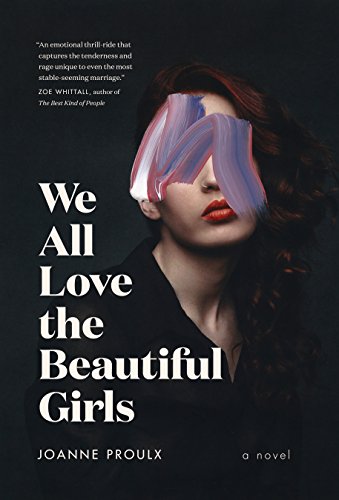
We All Love the Beautiful Stories #CanLit #Storytelling #AmReading

A Post by Giselle Renarde


https://www.amazon.com/We-All-Love-Beautiful-Girls-ebook/dp/B01N2QRXQQ?tag=dondes-20
I just finished reading a novel called We All Love the Beautiful Girls. It's Canadian literary fiction by Joanne Proulx. I don't think I've ever read a book the year it came out (I'm very behind the times that way), but I found it in a Little Free Library near my house. The title and the cover appealed to me. I'll admit, I thought there would be lesbians. Spoiler Alert: there weren't.

But instead of talking about the book, I'm going to talk about my family. What else is new?

Okay, I lied.  I'm going to talk about this book a bit.  I'm going to tell you about something that happens in the book. Something fantastically Canadian, come to think of it. Something that touches on the story of my family.

A boy passes out in the snow.  He gets frostbite and loses a hand.

Now, here's why this story hits home for me...

My grandma loved her dad. When her parents divorced, she chose to live with him. When my grandmother married, he came to live with her.  I think he slept in her kitchen. I know my uncle slept in a drawer. But this was the late 40s, so I guess people were just sleeping all over the place.

I never met my great-grandfather, but evidence suggests he was a kind and caring person. He came here from rural Scotland, where he'd been a farmer. During the First World War he worked with horses, and when he came to Canada he continued in that vein, working in stables where milkmen kept their teams.

He wasn't much of a drinker, as far as I know, but one New Year's Eve he went down to the pub.  I guess he drank much more than his body was used to, because on his way back he passed out in a snow bank.  He wasn't far from home.  My grandmother tells me the snow bank was right in front of the house.  She's the one who found him there the next morning.

I'm telling you the story of how my great-grandfather died.

But I'm making choices about how I tell it.  I could stop right there.  Everything I've told you is true.  However, the implication is that, when my grandma found her father in the snow on New Year's Day, he was already dead.  That's not the case.  It's the best version of the story of my great-grandfather's death, but it's incomplete.

Because, when my grandmother found her father in the snow, he was still breathing.  They rushed him to hospital, where he died of pneumonia three weeks later. He never got out of that hospital bed.

When we're creating fiction, we're obviously making choices about how we tell a story. But when we're telling the stories of our lives, we're making choices too.

Good storytellers choose the best possible version of that story.

This is a lesson I learned from my aunt, who, I now realize, is the person who taught me how to be a storyteller.  When I was a child, I found her stories spellbinding. Now, as an adult, I still do.

In fact, just this weekend she told us a very evocative tale that drew on every sense. Her siblings all agreed that, the way she'd told it? Yeah, that's not the way it happened. Nowhere near.  There was a consensus that her facts were way off.

But does that matter? To me? I guess it doesn't. It doesn't make a difference whether my uncle came in through the front door or the back.  That doesn't impact the heart of her story, and my aunt's choices add nuance and build strong images.

Would it do an injustice to my great-grandfather if I led you to believe he died in that snowdrift, in the wee small hours of New Year's Day? When, in reality, he died in a hospital bed three weeks later?

That, I can't answer.  It's his death, not mine.

Giselle Renarde is an award-winning queer Canadian writer. Nominated Toronto’s Best Author in NOW Magazine’s 2015 Readers’ Choice Awards, her fiction has appeared in nearly 200 short story anthologies. Giselle's juicy novels include Anonymous, In Shadow, Seven Kisses, and The Other Side of Ruth.

Thursday, November 23, 2017

Not So Psychic

by Giselle Renarde


My mom just got back from a vacation with her friends.

A couple weeks before she left, I had a dream my mother died during her trip. You'd think it would rip my heart out, but it didn't.  There was a voice in my head saying the universe had given me enough signs. I knew this was coming. So, emotionally, I was on the numb side of being okay.

It was a very bureaucratic dream. An unusually pragmatic one, for me. My dreams are usually fun, entertaining. This one was dull, grey. My siblings and I were dealing with all the mind-numbing paperwork that goes along with the death of a parent... instead of dealing with our emotions. That's par for the course, with us.

In my dream, I got the quote for how much it would cost to ship my mother's body home, since she died overseas.  I remember thinking, "My credit card won't cover this. What kind of person has a credit limit this low?"

I woke up the next morning to the familiar sound of an envelope shooting through my letterbox. Mail from my credit card company offering me a higher credit limit.

I'm not psychic.  I don't have precognitive dreams, never have.  But that one shook me. Not just the dream itself, but the confluence of dreaming about needing a higher credit limit and immediately being offered one.  That's a little spooky.

The last time I saw my mother, we were sitting around my grandmother's kitchen table.  My mom was saying how excited she was about this trip.  She mentioned that someone at the office was saying "Aren't you afraid of going there?" because the city she was travelling to has been hit with terrorist attacks in recent years.  She said she wasn't scared.  She didn't want to live her life that way.

Life is full of measured risks. She'd already decided she didn't want to be afraid about this trip.

That's why I decided not to tell my mom about the dream I had.  Yes it put me on edge, but I don't have a history of being psychic so I figured what was the point in frightening her?  Even if she dismissed it (which she almost certainly would), it would always be with her in the back of her mind. I didn't want her carrying that weight with her on a vacation she was so looking forward to.

The other side of the coin, of course, is: if I have what is potentially life-or-death information about someone else, shouldn't I share it with them?  Probably.  Maybe.  I don't know.  If someone knew I was about to die, would I want them to tell me?  I... guess... possibly?  What would I do differently? Get rid of anything incriminating. But if someone else had a dream that I would die, would I want to know about it?  I don't think so.  It's hard to say.

At any rate, my mother's plane landed safely back home this evening. I know because I checked the airport's website.  I can only assume my mother was alive and aboard.

Thursday, September 14, 2017

Leave It All Behind

by Giselle Renarde


For more than 50 years, my grandmother was married to a man with unchecked mental health issues.

My grandfather didn't believe in doctors. I want to say he hadn't seen one since WWII, when shrapnel was embedded in his lungs (where it remained until he was cremated), but I think I'm romanticizing the past a bit. Because in the late 1950s my grandfather was incarcerated for committing a violent crime against his family. Since he was institutionalized in psychiatric correctional facility, I suppose he would have seen doctors then.

I can't imagine that helped matters any.

Point being: my grandfather didn't see doctors if he wasn't being forced to. But he did self-medicated. With alcohol.

I spent a great deal of time with my grandfather, in my youth. I remember him very fondly. After his death, my grandmother revealed to me that he'd been abusive toward her in every way possible.  I was shocked to hear this. It didn't sound at all like the grandfather I'd known and loved. In fact, it sounded more like my father... who was also institutionalized after committing criminal acts, in what's now known as a forensic psychiatric hospital.

When I started working in the domestic violence sector, I learned more about the cycle of violence that plays out through the generations. That's when the pieces started coming together. My mother was "daddy's little girl"--her words. So she married a man just like her father. She saw no reason not to.

When my grandmother began speaking more openly about the family violence that had taken place throughout the years, my aunts started talking too. Not my mom. My mother doesn't like to talk about unpleasant things. She says the past is in the past. It isn't, and perhaps one day she'll come to that realization, but she hasn't yet and it's not an issue that's easy to push.

Throughout my childhood, my mom's two younger sisters were an endless source of funny family stories. I remember taking the subway with them when I was six or seven years old and saying, "Tell me another story about when you were kids!" I couldn't get enough.  I loved their hilarious stories about my aunt's pet rooster and the family of ducks that lived under their house.

So when the darker stories started coming out, I was really amazed. All those sunny family stories were still true. They'd just left out the unpleasantness until now.

My younger aunts told me about coming home for lunch on school days. My grandfather did shift work and he was home during the day. My older aunts were in high school, and their lunch period started a little earlier than the lunch hour at the elementary school. So my younger aunts would walk home together, and on certain days they'd find my older aunts leaving the house. No words would be exchanged. Only a frown and a shake of the head. That was enough to inform the younger kids that it wasn't safe to go inside. On those days, my aunts didn't get to eat lunch.  They went into the field across the road, and they played or gleaned grains for their pets.

The new stories, the dark stories, don't go into detail the way the sunny ones had.  But they don't have to.  I know now that my mother grew up in much the same family environemnt I did. There are so many nuances to the type of fear a child experiences growing up in a household that could spiral into violence at any moment. You can feel it all around you. The air is too still.

My grandmother once told me about a book she read some time in the 1950s. It was a novel about a woman she identified with, a housewife with a whole bunch of kids. Not a bad mother, but not a happy housewife. A woman who'd had enough of the pressures at home.

The character in this book packed a suitcase and left it all behind. Left her husband, left her kids. Took off and had adventures of her own.

I remember my grandmother telling me how much that book meant to her.  That character was her hero, because every day of her life she wanted to do the same thing: pack a suitcase, leave it all behind.

But my grandmother... she never did leave.


Giselle Renarde is an award-winning queer Canadian writer. She was nominated Toronto’s Best Author in NOW Magazine’s 2015 Readers’ Choice Awards, and her book The Red Satin Collection won Best Transgender Romance in the 2012 Rainbow Awards. Giselle has contributed erotica and queer fiction to nearly 200 short story anthologies and written dozens of juicy books, including Anonymous, Seven Kisses, Bali Nights, In Shadow, and Nanny State.

Visit http://donutsdesires.blogspot.com for free erotica and exciting new releases.

Thursday, August 31, 2017

Jesus was an Alien & my Minister was an Atheist

by Giselle Renarde


My girlfriend believes that Jesus was an alien.

If you say to her, "Hey, Sweet, do you believe that Jesus was an alien?" she'll say no, no, no, not really. But you'll notice a glint in her eye, and if you know her as well as I do, you'll realize she's not being entirely honest with you.

She'll go on to say "for argument's sake" that it's entirely possible Jesus was an alien. "I mean, if someone from 200 years in the past were to see you using modern technology, they would think it was some kind of magic, right? Jesus is reputed to have performed all these miracles. Isn't it possible he just came from a more advanced civilization--whether that be from Earth's future, from another planet, or, more likely, from another dimension? From a race of beings that could adapt their physical forms to look human?"

Clearly, she's contemplated this topic quite a lot.

I haven't spent a great deal of my adult life thinking about Jesus, or religion in general. But when I was thirteen, religion was my bag, man! I loved reading about religion. Religions. I never read the Bible, but the Ramayana? Yup. The Bhagavad Gita? Check. I would peruse the shelf of sacred texts at the public library and read everything I could possibly understand.

And what did I understand as a thirteen-year-old? Excellent question. Probably more than I'd understand now. I feel like I've spent my entire adult life in an ever-quickening process of stupidification. I swear I used to be smarter than this.

But I digress.

There was a rule in my family, which came from a rule in my mom's family: kids go to the local United Church until they turn 14, at which point they can decide whether or not they want to continue attending.

That's why 13 was such a big year for me, religion-wise. This was a huge decision, something I took very seriously. Did I want to continue attending a Christian church? There were so many other religions in the world. Should I choose a different one?

My family wasn't churchy in the least. My father was too hung over to do much of anything on Sunday mornings. My mom "has always been a follower" (direct quote from my grandmother, there) so you could tell her pretty much anything and she'd buy into it. She only started taking me and my siblings to church in the first place because, when I was 6, I asked, "What is God?" and neither of my parents knew how to answer that question.

I don't remember my father's parents ever going to church, but I spent lots of time having deep philosophical conversations with my maternal grandparents: an atheist and an agnostic.

The only people in my family who really talked about God either questioned the existence of a divine entity, or staunchly disbelieved. (It was my grandfather's participation in WWII that convinced him God could not possibly exist, because a divine being would never allow the atrocities he witnessed to occur.)

As a kid, I was magnetically drawn to mysticism, and I really appreciate all the time my grandparents spent talking with me about this topic that seemed of vital and immediate importance. I didn't understand how all the other adults in my life could be so disinterested. If I asked my mom questions about God and spirituality and world religions, her eyes would glaze over and she'd tell me she never thought about those things. She wasn't interested in thinking about those things.

Now that I'm the age my mom would have been when I was asking all those questions, I get it. I experience spiritual joys, mostly interacting with the natural world, but spirituality is not something I actively think about or even attempt to process.

As a 13-year-old researching which religion was right for me, I ultimately decided... none. I felt that I was a spiritual entity, but I was just so put off by the massive corruption that seemed to accompany every organized religion I researched.

When I attended my childhood church later in my teens (I guess to keep an eye on the little ones or as a favour to my mother? I don't remember) there was a new minister, someone who has since become infamous as an author and atheist.

I remember her saying that Christianity wasn't the "right" religion. The United Church wasn't the "right" church. Different religions were right for different people, and any religion could be the right religion. It was up to the individual to use their religious beliefs to do good in the world, and not to use dogma as a tool of oppression.

Now I'm thinking: Right on! Sing it, sister!

But at the time, I thought... if my own minister doesn't believe this is the "right" religion, why should I?

When I turned fourteen, I decided to go it alone. One day I came across a word, "freethinker", and that sounded good to me. I wanted to be free to think and analyze and process the world against an internal sounding board, not a book or a building.

These days, if I'm asked to fill out demographic information, I check the box that says "No religious affiliations."

And that's fine. Authors are supposed to be all introspective and stuff, but I guess I've grown away from 13-year-old me. I just don't think about these things anymore.


------
On another topic, can you believe I've written a novel's worth of blog posts here at The Grip over the past four years? That's a lot of words! So I've decided to package them up into themed ebooks for your reading pleasure (and the reading pleasure of people who don't tune in here). 

The first in the series is available now. It's free, but not forever, so if you've got friends who are committed to failure, tell them to grab a copy of How to Fail Miserably at Writing!

Thursday, October 8, 2015

On Not Actually Answering the Question

by Annabeth Leong

I often come back to the special sort of panic that would set in for me when a certain sort of worksheet was handed out in elementary school. A list of seemingly innocent questions, with neat blank lines laid out beside them. Who is your best friend? What is your favorite color? What is your favorite food? These worksheets often had titles such as “About Me,” and yet the way they approached the world was fundamentally not about me.

If no one had ever told me I was supposed to have a favorite color, I would not have had one. I would have just had colors I liked. The same goes for friends and for food. I like easily, and I like that about myself. I am also a very complicated thinker, for better or for worse. I am and have been always aware of situations. Who is my best friend? Are we talking about the person who is best to go to the movies with or the person who is best at keeping secrets? What is my favorite food? Are we talking about dessert food or snack food or actual dinner?

So I find that the question of what’s most important to me discomfits me in exactly this way. Is the question about what’s most important to me as a writer? As a person? In this exact moment in my life?

***

As I contemplate possible answers, I worry, as I often do, about how they might be perceived. I feel like I’m culturally allowed to say “family,” or “God,” or perhaps name a value such as honesty. If I say career, I can probably get away with it, though I may sound selfish. Other stuff starts heading into shaky territory where I have to put my case forward in a very persuasive and creative way or risk sounding shallow or antisocial.

But the list of acceptable answers doesn’t sit right with me. Let’s take the example of family. It’s a good and acceptable answer, a cliche but a deep one, and it’s true for a lot of people. Family certainly is very important to me.

But then the situations come to my mind. When my father died, I got onto the next plane home, but it was the first time I’d been there for twenty years. My family there would very much agree with statements like, “Blood is thicker than water,” and, “When it comes down to it, family is the most important thing.” I have treated those things as true in my own way, as best I could. If family weren’t very, very important to me, I would not have stayed in touch with my dad at all. He was a dangerous and violent man, and though we loved each other very much, it wasn’t good for me to be around him. On the other hand, I hadn’t seen the aunts and uncles and cousins I grew up with for two decades. I was an exile from a home, a stranger who had lost her culture, a person they didn’t know or trust.

As he lay dying in the hospital, his girlfriend asked me why I hadn’t come to visit him when he was healthy (I allowed him to visit me twice in those twenty years). “It would have meant so much to him,” she said. I remember feeling stunned at how naive she was. I knew he would have wanted that, but I also knew I wouldn’t have been safe. Because the home where I grew up is far from my current home, and isolated, and an expensive place to visit, I would have always had to go there on his terms. I never wanted to do it if I couldn’t afford my own place to stay, my own car, my own escape route. The especially complicated part is that my dad was the one who taught me to pay attention to that sort of thing, to never walk into a bad situation without cab money tucked into my sock.

I can’t say, though, that I lived my life valuing family above all else. If I had, I would have taken the risk and gone to see him. After all, as he liked to remind me sometimes, he was still my father no matter what.

I remember the way I felt when I read War and Peace. Princess Marya remains utterly devoted to her cruel father (who does love her underneath), and is in the end rewarded with his acceptance and the true love of a handsome soldier. I remember wishing I could have been that person. But I am not and never have been devoted in that entirely self-sacrificing way. And so I chose self-preservation over family most of the time—but not often enough for me to say self-preservation is the most important thing.

When I was getting divorced, I did not want to be a person who got divorced. I did not want to declare to the world that I honored myself and my happiness above family and commitment and promises before God. I believed I was doing something wrong by walking out of a marriage—and there were plenty of cultural messages around to tell me so—but I couldn’t turn my back on myself anymore. So I again chose self-preservation and authenticity over family.

I hadn’t always, though. I spent eight years sacrificing myself on the altar of that commitment, being praised by friends as a martyr and a saint, aware of the bittersweetness of that praise. So it took me quite some time to get around to self-preservation, partly because other values are also very important to me.

***

There is emerging in this post the possibility that I could say “authenticity” is the most important thing to me. That comes out in the way I’m writing about important things, and in the way I’m telling these stories about my father and my divorce. I certainly value authenticity deeply.

But how authentic can I say I am when I spend so much time hiding? I am that rare writer who does not like to talk about her work, mostly because I fear how much it tells people about me. I avoid giving out my pseudonym, and I am quite skillful at redirecting conversations so people don’t notice that I’ve never actually answered any of their questions. I frequently live in fear of some sort of discovery.

It’s not just the erotica. I fear being found out as queer (I know there is increasing societal acceptance, but “increasing” isn’t the same as “acceptance”). I fear being found out as polyamorous. In places where people know me as a person who has a girlfriend, I fear being found out as a person who has a husband. In places where people know me as a person who has a husband, I fear being found out as a person who has a girlfriend. On the occasion of a recent death in the family, my girlfriend sent flowers, and I didn’t know what to think about hearing them described as a gift from my “friend.” Part of me wanted to stand up and say, “She’s not my friend.” Part of me sneered at that idea. What were people supposed to say? Was I ready to come out in all those ways to all my cousins, close and distant, in that conservative town where people were already having trouble grokking the concept of me as a person who is choosing not to have children?

As a writer, it is deeply important to me to be as authentic as possible, to be responsible for the words I put on the page. I wrestle a lot with what that means. I write stories even if they’re ugly and don’t represent my values for the world, but then I wonder what it would look like if I tried to embody my values more fully. I frequently feel concerned about what messages will come across in what I write, and yet there’s another part of me that doesn’t give a fuck and wants to fling myself into wherever the wild winds of creativity take me.

***

When addressing the question of importance, all those points about context come out very strongly for me. I have often chosen self-preservation, and I think that’s good. I’m trying to choose that more. On the other hand, I choose authenticity as much as I have the courage for it. I choose family when I think I can survive the choice. I choose tradition when I’m able to hide the ways I’m deeply nontraditional. I choose love when it doesn’t cost more than I’m willing to pay. I choose truth when I don’t believe it’s unkind. I choose kindness when I feel safe enough to do so. I choose art when I have the will, and distraction when I don’t.

All this talking is so abstract, though. I love being a person with a body. I spend so much time using that body, enjoying the blissful relief it gives from all the thinking I do. I work out hard, sweating until it feels like it’s raining from my head. I love being a person with a mind, and I spend so much time gathering new knowledge, satisfying my curiosity about my obsession of the month. I love being a person with a soul, and I spend so much time pursuing what I call the “spooky feelings,” those mysterious things that touch on love and religion and the unknown.

It is not in my nature to rank things. It strikes me, though, that I’m still answering that worksheet, still trying to get at the question of what it is that makes me myself. Funny that talking about what’s most important becomes a discussion of oneself, a statement of identity. That outside-looking question quickly turns into one that points within. And perhaps that is the real discomfort underneath it all. Saying what’s most important to me amounts to saying something big and personal about me, and subjecting that to scrutiny, hoping there is something universal in the particular, hoping it does not all come out sounding too self-absorbed.

Of course, that’s what I do all the time when I write. When I write, though, I get to tell more than one story, create a stable of characters, run multiple plots all at the same time. I get to show the situations and the context, and the different answers that come up at various times for various people.

Thursday, October 1, 2015

True, Heartfelt, Loving Kindness

by Giselle Renarde


My mother recently told me about something that happened when I was a child. There was some kind of workshop for parents at my school. The leader asked everybody to write down five things they enjoyed doing, but none of those items could be family-related.

While everybody else wrote their lists, my mom sat staring at a blank piece of paper.

The workshop leader came over and asked what was wrong.

My mother said, "I can't think of anything to write. Everything I do is for my kids."

"Well, what do you do for fun?" the leader asked.

"I spend time with my kids."

"But non-kid things," the leader said.  "Do you take time just for you?"

My mom didn't understand that question. She didn't understand the concept of ME TIME.

"What about reading?" the leader asked.  "Do you ever read a book to relax?"

"No..."

"What about friends?  Do you go out for drinks?  Have a girls' night?"

My mom didn't have friends, aside from other parents at my school. And everything they did together involved us.

The workshop went on, but all my mother remembers was the fact that she had no interests.  Twenty-something years later, she told me she felt like a non-person, in that moment.  "What kind of a person doesn't have even ONE thing that they enjoy in life?"

I actually think it's sweet that my mom's joy came from us, her children.  It showed.  She never told us to quiet down or give Mommy a moment.  I don't remember ever feeling like our mother resented us being around. That must have been because there was nothing else in the world she wanted to be doing. She just wanted to be around us, because we were the most important thing in her life.

Is there anything in my life that I would call THE MOST IMPORTANT?

The usual, I guess: my family, my girlfriend, my cats, my career.

But that one THE MOST IMPORTANT thing is rather more nebulous. It isn't a person or a thing.  It's more like a feeling. It's kindness--which probably sounds weird, coming from someone who regularly swears at strangers (but, honestly, why do so many people try to run me over? and if a jogger shoves me into a mud puddle, oh yes, that jogger WILL be called an asshole)...

What was I saying?

Right. Kindness.

I don't always live up to my own ideals, but when I do, I make a conscious effort to treat everyone I encounter with the same big love I feel for my family. I see no reason not to. Sometimes it's really easy, but often it's a challenge. Many humans are not friendly. That's when I need to redouble my efforts, because the people who are meanest to me are probably the ones most in need of kindness.

True, heartfelt, loving kindness is important.

That's not a bad answer, eh? 

On that note, I've got a new anthology on the market and I'm giving ALL my royalties away. I'd love it if you could help me spread the word about LGBT Love:

LGBT Love
10 Queer, Trans, Bi, Lesbian and Gay Romance Stories
by Giselle Renarde

***All royalties from the sale of this anthology will be donated to charitable organizations supporting LGBT individuals and communities.***

Barnes|Noble: http://www.barnesandnoble.com/w/lgbt-love-giselle-renarde/1122642963
Apple: https://itunes.apple.com/us/book/id1038917868
All Romance Ebooks: https://www.allromanceebooks.com/product-lgbtlove10queertransbilesbianandgayromancestories-1894075-166.html
Amazon: http://www.amazon.com/gp/product/B0155ZIXXU?tag=dondes-20
Amazon UK: http://www.amazon.co.uk/LGBT-Love-Lesbian-Romance-Stories-ebook/dp/B0155ZIXXU

Tuesday, September 29, 2015

The Importance of Being... J.P. Bowie

Family... I haven't had a family in close to forty years. I lost my parents and both my sisters in a seven year span. You don't really know how important they are until there are no longer there. Yet, their importance lingers. Everywhere I look I see signs that tell me nothing is more important... some people even have it tattooed on their skin... Family First etc.I get a good laugh when I see porn stars with that inked on their chests... Hey Mom, lookit! Thinking of you while I fuck this uh, person.

This is my last post for OGG, so I don't want to get maudlin. And really when I think about it, I have been a lucky so and so for most of my life. Like most gay men and women, through the years, I have found myself surrounded by people I can honestly call friends, good friends, a surrogate family if you will. Forget the old cliche... you can choose your friends, your family is thrust upon you... sometimes your friends choose you, and your family thrusts you away. My family didn't do that, so they live in my memory with love. Again I was fortunate.

The wonderful man I am married to doesn't have such loving memories of his family, yet he remains true to the idea of a warm and caring circle of friends he can call family. It always amazes me that even out of the most repressive upbringings a soul can emerge, eager to forgive those who tried to smother the goodness within, and belittle the kindnesses so willingly given.

That does sound a little maudlin, so I will close with the wish that all of you have found love in some form or another... that there is someone close, friend or family member, you can share your hopes and dreams and troubles with. It's important.


Thursday, July 23, 2015

You don't really care for music, do you?

by Giselle Renarde


I couldn't remember the last time I'd heard my mother sing. Had I EVER heard her sing? Happy Birthday, I guess. Even then, she sings very softly. She's self-conscious about her teeth, so she tends to cover her mouth a lot.

When I was in Grade Twelve, I remember my mother bursting into my bedroom and demanding to know why I hadn't told her about parent/teacher interviews. Her best friend worked at my school.  I guess she found out after the fact.

I was surprised she even cared. I'm not exactly an only child, and my mom devoted much of her energy to the younger ones. I was doing fine on autopilot.  I didn't think she was interested in my education.

But that's not why I didn't tell her about parent/teacher interviews.

I can't remember how I answered her question, but she obviously didn't buy it because she burst into tears. My mother isn't exactly dramatic, or even overly emotive (I don't think we've ever told each other "I love you" even though we obviously do), so this was a strange occurrence.

After bursting into tears, my mother covered her mouth and said, "It's my teeth, isn't it? You're ashamed of me. You don't want anyone knowing your mother has such awful, ugly teeth!"

I've mentioned before that I was a pretty steely teen, but in that moment I felt so... so BAD for my mom. It had nothing to do with her teeth. That thought would never have crossed my mind. Not in a million years.

The truth is, I hadn't told her about parent/teacher interviews because I had a massive crush on one of my teachers--a married man who fell for me too, I guess, because I later became his mistress. Our relationship lasted ten years--ten too many, some might say, but I try not to punish myself for my past. (He still emails me once a year to commemorate the anniversary of the last time we had sex. Ummm... gross.)

My mom would have seen it coming. Even if nothing had "happened" yet, she'd have foreseen it when she met him. Moms are like that. I hear they have eyes in the back of their heads.

That's why I didn't want her meeting my teachers. I was a teenager in love. It was a BIG SECRET. If my mom found out, she'd ruin everything.

Nothing to do with teeth.

Have you ever heard of Orchestra Karaoke? It's karaoke where the singer is backed by a full symphonic orchestra. Cool, right? They staged an event this year at Luminato--an arts festival in Toronto that happens to be chaired by Rufus Wainwright's husband--and I went my mom and my sister.

Being a free outdoor event (and also being karaoke), etiquette was a little different than you might be used to. The audience wasn't silent during performances. People sang along. A lot. Not in a way that overshadowed the karaoke-ist, but in a way that supported the soloist--like a choir.

Yeah, like a choir. We're backing you up, good buddy. You sing your little heart out. We got your back.

My sister is a musician and I used to sing semi-professionally amateurishly, so we raised our voices. Nothing new there. My mom remained quiet. Nothing new there.

And then Leonard Cohen's Hallelujah came up and my mom jumped in her seat. She said, "I love this song."

Weird. I got into Leonard Cohen at university, as one does, but my mother didn't even go to university. Ergo, thus, therefore, I naturally assumed she'd never heard of Leonard Cohen.

I can't remember which audience member was selected to take the lead. I don't think I listened to her, or him (reaaaaally don't recall). The only voice I heard was my mother's.

At first, I almost felt... uncomfortable, maybe? It was strangely intimate. But my mom had a pretty voice. Reminded me of a bird, or of nature. It sounded like HER. I knew that voice, and I couldn't remember ever hearing it before that.

She sat beside me and sang Hallelujah the whole way through. The lyrics were posted on a screen, but she seemed to know them already. She didn't sing loudly, but she didn't need to. She wasn't singing for anyone else's ears.

And you know what?  I didn't see her cover her mouth once. Not ONCE.

Thursday, February 19, 2015

After Family Day

by Giselle Renarde

Monday was a holiday here in Ontario (and a few other provinces--I forget which ones).

Monday was Family Day.

When it first came into existence a couple years ago, I was down on Family Day.  It seemed like such a blah Conservative Government idea. Everything's about the family, with them. The rest of us don't matter.

It's kind of funny, being just one person. I have a family of origin, but I think I've lived alone long enough to qualify as a spinster/cat lady. It's the part I was born to play, baby!

Sure I've found the woman I want to be with until the day we die (simultaneously, I can only hope, because I don't want to face a world without her), but marriage isn't on my mind.

And no I don't want kids. Do you even know how much I enjoy sleeping? Sleeping is, like, three of my top five favourite pastimes. I'm not willing to give that up. Just let me have my bed and let me have my cats and I'm good.

God, I love my cats.

Giselle, preparing to fly off into the sunset...
Anyway, over the years my outlook on Family Day has changed. I willed it to change. I rejected the jaded view I started out with. I wanted to take a more benevolent outlook on this holiday, so I did.

You can change your mind just by wanting to. Such things are possible.

I re-envisioned Family Day as an inclusive event celebrating family in all its forms. Celebrating chosen family. Celebrating extended family and family of origin and friends and roommates and all the people we love and care for.

My girlfriend blew my mind the first time she told me I was family. I don't mean in a, "Hey, I was just charting my family tree and it turns out we're distant cousins" sort of way, although that would be hella kinky. 

Damn. Now I want to take up genealogy. I've always had a thing about cousins.

That's why this happened.
Sorry. I'm veering off course a little.

What Sweet meant was that family is about care and mutual support and knowing that person will ALWAYS exist in your life, in some way. Family is someone to whom you're inextricably bound. You can argue, you can disagree, you can even have "knock-down blowouts" as she calls them--those fights you have where you hurt each other deeply and you stew in resentment for days and you tell yourselves you'll never forgive each other--but you'll always come back to each other. Because you're part of each other.

That's family.

On Family Day, I wanted to blog about my kin. But then I spent the whole day with them and all our outdoor activities in the frigid 13-below-zero Canadian winter really tired me out.

So I didn't get to tell the world how much I love my mom and my siblings. I didn't get to tell anyone how awesome they are for claiming my girlfriend as one of their own, for embracing her with all their hearts, for never once questioning her gender identity or misgendering her when she wasn't around. They've welcomed her into our tribe so lovingly my eyes are filling with tears as I write this.

Family can be a beautiful thing. Maybe it does deserve a day of celebration after all.

Thursday, August 7, 2014

I'm Tired of Writing Books That Don't Sell

by Giselle Renarde


I need to stop writing so many books.

I write waaay too many books. Do you even know how many completed manuscripts are sitting on my hard drive right now?  Three.  Three full novels just wasting away. And it's not like I've shopped them around and they've been rejected by publishers.  I haven't shared them with anyone yet.

I've blogged before about how getting published is only half the battle. Less than half, these days, probably. You spend all this time pouring your heart out on the page and, what, three people buy a copy?  And then you feel like you've disappointed your publisher (and you probably have, and they'll probably never give you another contract) and you wonder if you'd be happier if you just self-published. 

So you self-publish the next one and how many copies does it sell?  Three.  And you go to town marketing this son of a bitch because it's a good book (it really is! if only someone would read it!) but the marketing makes no difference. Sales slip. Across the board. You suck. You must suck, or more people would be buying your books. What's the point in writing?

I shouldn't write blog posts when I'm half-asleep, because this is what comes out. But I post these thoughts because I'm too honest for my own good and there are enough fake-it-'til-you-make-it authors out there.  Don't believe the hype. People keep telling me I'm famous, but I still live below the poverty line.

A lot of readers have told me they appreciate how close I let them get to my life. That's why I decided to publish a book of correspondences. Remember how I was off in the woods a couple weeks ago?  Well, I was on vacation with my family and all the while I wrote letters home to my girlfriend, who was looking after my cats.  You can read them now in "A Week in the Woods with Family: Ramblings of an Author in Cottage Country," which is available for FREE at Amazon until Sunday:
Amazon.com
Amazon Canada
Amazon Australia
Amazon UK


Anyway, the question was what book do I want to write?  The answer is... the book that sells.