My grandmother died.
The past month has gone by in
a haze of hospital visits as my grandmother--my favourite of all the
humans--took a turn for the worse. One week ago, she was taken off food
and water. I got up the next morning and tried to wash some dishes
before leaving for the hospital. She wasn't dead yet, but that's when it
really hit me: she would be, in the next few days. I had to come to
terms with losing her.
I cried into my dishwater. I
sobbed so hard I thought I was going to throw up. After that, I realized
I'd started speaking about her in the past tense. Technically, she was
still alive, but barely. Just barely.
We were there at her bedside when she took her final breath: all of her many daughters and me.
I'd
never watched someone die before. A few of my aunts had warned me about
the horrific expressions they'd seen on the faces of loved ones. Or
unsettling sounds they'd made. As my grandmother's breath slowed, my
aunts wanted me to be prepared for the things they'd found disturbing
about death.
But nothing like that happened when my grandmother died.
She
just stopped breathing. That's it. Her breath slowed down, and then it
stopped. She slipped away. No strange expressions or noises. It was
such a peaceful passing. I'm eternally grateful that I got to be there
for it.
After she'd died, one of my aunts asked, "What was Mummy's legacy?"
Her
family. Everyone agreed about that. She was proud of her
accomplishments and her work, but the one thing that lives on now that
she's gone is this big family she produced.
In that
moment, when my aunts and I talked about legacies, I stopped feeling
like a worthless person with a useless career. I am my grandmother's
legacy. There are no other storytellers in my family. If I don't
preserve the stories she told me--of her life, of her parents, of her
grandparents--who will? Her generation is gone. I must preserve their
memory.
I matter. I mattered to her. I'm not worthless. She saw my value.
My
grandmother believed in me, even when I didn't. She believed my work
was important, even when I claimed I was just in it for a quick buck.
She knew there were easier ways to pay the rent, and she was right about
that.
She was proud that her grandchild grew up to
become a writer. In my family, we're not showy with the emotions. We
don't go around saying "I love you" or "I'm proud of you." In my entire
life, my mother has never said those things to me. I've never said them
to her.
But my grandma told me she was proud of my
writing career. She told me that all the time. She said "I love you" to
me only once, and I was so uncomfortable with the bigness of the emotion
that my response was: "Shut up! Why are you saying that?"
I
never returned the sentiment until after she died. As the colour
drained from her skin, I petted her cheek and said, "I love you,
Grandma."
Maybe I didn't say it in words while she was
alive, but I know she knew how I felt. I showed her by spending time
with her. Lots of time. That wasn't solely for her benefit. She was
truly my favourite person on the planet. I'm so thankful for the nearly
40 years we had together.
I will miss her forever, but
every time I start feeling worthless, I'll be able to remind myself I
have stories to tell. I have value. I am my grandmother's legacy.
My
grandmother was always an avid reader--she'd read the dictionary if
there was nothing else around--and a lifelong library user. If you've
been following my many posts about my grandmother's life and you feel
inclined to commemorate her death, I encourage readers to make a
donation in her memory to your local public library system. I think
she'd like the idea that there were more books and services available to
more people because of her.
Heartfelt thanks for allowing me to share our stories with you.
Giselle
Showing posts with label storytelling. Show all posts
Showing posts with label storytelling. Show all posts
Thursday, November 8, 2018


Thursday, December 21, 2017
We All Love the Beautiful Stories #CanLit #Storytelling #AmReading
A Post by Giselle Renarde
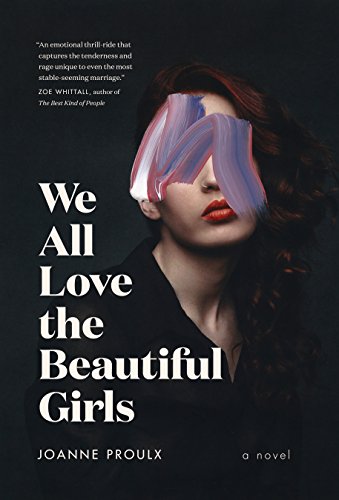
But instead of talking about the book, I'm going to talk about my family. What else is new?
Okay, I lied. I'm going to talk about this book a bit. I'm going to tell you about something that happens in the book. Something fantastically Canadian, come to think of it. Something that touches on the story of my family.
A boy passes out in the snow. He gets frostbite and loses a hand.
Now, here's why this story hits home for me...
My grandma loved her dad. When her parents divorced, she chose to live with him. When my grandmother married, he came to live with her. I think he slept in her kitchen. I know my uncle slept in a drawer. But this was the late 40s, so I guess people were just sleeping all over the place.
I never met my great-grandfather, but evidence suggests he was a kind and caring person. He came here from rural Scotland, where he'd been a farmer. During the First World War he worked with horses, and when he came to Canada he continued in that vein, working in stables where milkmen kept their teams.
He wasn't much of a drinker, as far as I know, but one New Year's Eve he went down to the pub. I guess he drank much more than his body was used to, because on his way back he passed out in a snow bank. He wasn't far from home. My grandmother tells me the snow bank was right in front of the house. She's the one who found him there the next morning.
I'm telling you the story of how my great-grandfather died.
But I'm making choices about how I tell it. I could stop right there. Everything I've told you is true. However, the implication is that, when my grandma found her father in the snow on New Year's Day, he was already dead. That's not the case. It's the best version of the story of my great-grandfather's death, but it's incomplete.
Because, when my grandmother found her father in the snow, he was still breathing. They rushed him to hospital, where he died of pneumonia three weeks later. He never got out of that hospital bed.
When we're creating fiction, we're obviously making choices about how we tell a story. But when we're telling the stories of our lives, we're making choices too.
Good storytellers choose the best possible version of that story.
This is a lesson I learned from my aunt, who, I now realize, is the person who taught me how to be a storyteller. When I was a child, I found her stories spellbinding. Now, as an adult, I still do.
In fact, just this weekend she told us a very evocative tale that drew on every sense. Her siblings all agreed that, the way she'd told it? Yeah, that's not the way it happened. Nowhere near. There was a consensus that her facts were way off.
But does that matter? To me? I guess it doesn't. It doesn't make a difference whether my uncle came in through the front door or the back. That doesn't impact the heart of her story, and my aunt's choices add nuance and build strong images.
Would it do an injustice to my great-grandfather if I led you to believe he died in that snowdrift, in the wee small hours of New Year's Day? When, in reality, he died in a hospital bed three weeks later?
That, I can't answer. It's his death, not mine.
Giselle Renarde is an award-winning queer Canadian writer. Nominated Toronto’s Best Author in NOW Magazine’s 2015 Readers’ Choice Awards, her fiction has appeared in nearly 200 short story anthologies. Giselle's juicy novels include Anonymous, In Shadow, Seven Kisses, and The Other Side of Ruth.
Subscribe to:
Posts (Atom)