Showing posts with label what i'm reading. Show all posts

Wednesday, October 9, 2019

Red Rising: A Disturbing Look in the Mirror?

I just finished binge reading the first five books of Pierce Brown’sbrilliant Red RisingSeries, and now I’m waiting impatiently for the next book. Although to be honest, I really need a break to breathe, to reflect, and to recover from five books worth of gut-wrenching, nail-biting, unputdownable intensity. 


Brown says his inspiration for the series was the plight of Irish immigrants in the 19th century and the disenfranchisement of the working classes, though it was Sophocles’ tragedy, Antigon,ethat inspired the beginning of Red Rising. It is when the hero of the story, helldiver, Darrow, forfeits his life to bury his wife, who has been hanged for singing the forbidden death song of her people, that he is literally remade as the ultimate weapon by the Sons of Ares resistance movement. Darrow’s people, the Reds, are the lowest social rank in the highly stratified Empire. They have been taught that they are suffering pioneers and heroes of the Empire. The Reds are the expendable work force living their lives entirely underground on Mars, where they labour in the treacherous helium 3 mines. Helium 3 is essential for terraforming. But Mars has long been terraformed into a paradise to which the Reds have neither access or knowledge -- all accomplished through the sacrifices of generations of their people. Darrow’s task is to earn acceptance into the training institute for the elite of the controlling class known as Golds. To call the Institute Hogwarts in Hell is an understatement. Darrow must survive and complete the horrific training in order to infiltrate the upper echelons of Gold society and implement the Sons of Ares’ plan of a takeover from within.

The series chronicles the horrendous cost of the fight for liberation that leads to revolution and the destabilization of a society. In the paying of that price, the lines between heroes and villains become blurred. What are desperate people willing to do to free themselves from tyranny, and at what point does the rebel become the tyrant, or even the monster? Can a new world rise without the destruction of the old? Because Brown’s Red Rising series is written on a solar system-wide scale, that question is larger than life and addressed clearly and brutally. 

No one gets away unscathed, and the cost is often devastating. All of the horrors of war and its aftermath that have been brought into our living rooms since television first broadcast the Vietnam War are amplified in Brown’s novels and made both more shocking and more impersonal by the wholesale use of nuclear weapons capable of destroying entire planets. 

Darrow, later known as the Reaper, beautifully inhabits the role of both the flawed saviour, and the villainized mass murderer, who carries on his shoulders the dream of his people and the annihilation of an ordered way of life. Even at his darkest moments, he is relatable in his humanity and his longing for family and home. All of the characters are multi-dimensional and full of flaws and quirks that always surprise. They humanize and ground a story that might have easily become a depersonalized look at war and the rise and fall of an empire. This series was definitely not escapist reading for me, and yet I couldn’t put it down. The story of Red Rising feels very much like Brown is holding a mirror up to readers in hopes that we’ll catch a glimpse of the price paid for a society where those of us in the middle may live happily and blissfully ignorant of the cost. 

Sunday, October 6, 2019

Doing My Husbandly Duty (#amreading #amreadingfantasy)


by Cameron D. James

It's been a literal year since I've finished reading a book (other than the books I read for work). I remember packing for a vacation to Australia a year ago and taking along two paperbacks I knew I'd like.

I was so angry with both books that I put them down unfinished. One is a thriller by an author who has a serious "bury the gays" problem and when I saw the antagonists were a gay couple, I knew we'd have a repeat. The other was a sci-fi novel that, among other things, was exploring racial tensions. I put it down when someone went on a very public racist tirade against their coworker, and their boss basically said to the racist guy "Take it easy on him!" That was it. No other follow-up. A racist tirade like the one depicted in that book should have led to an immediate dismissal. It certainly would in modern day context, so I'd expect the same in a utopian future. I was disgusted, so I closed the book.

Anyway, after that, I really got out of reading. I tried to read a couple other books but quickly lost interest. Everything I picked up was either boring or I had a big complaint about it.

Then my husband John Robin published his fantasy debut A Thousand Roads.

I picked it up and read it and kept reading it. I'm almost done -- less than a hundred pages in this 590-page book.

This book has been a journey for John. He wrote the first draft shortly after we started dating about seven years ago. He wrote it, revised it, had an offer from a small publisher, felt it wasn't ready for the world, shelved it, wrote something else, came back to it, rewrote it, rewrote it, rewrote it, rewrote it, and rewrote it some more. He's pulled late nights and all-nighters working on this. It's taken up his daytimes, his evenings, and his weekends. He's poured everything he has into it.

And it paid off.

The difference between the first draft I read seven years ago and this now-published final copy is stark. The core story is still there -- the most important part. But the storytelling has matured a lot over seven years. While the first draft was really good, this final book is fantastic.

Of course I'm supposed to say that because I'm the devoted husband. But even if I wasn't, I would still say the same.

A Thousand Roads follows Jak, an orphan youth who always seems to have those who love him torn away from him. When a dark power rises and the world readies for the evil to come, Jak finds that people are out to get him. Someone wants him... for something.

Armed only with a sword that his mentor gave him before dying, he ventures out into the world in search of escape. He wants peace. He wants his books. He wants family.

In his quest for escape, he meets people who promise to help him, but he soon learns that everyone has a nefarious plan. Everyone wants to use him for their own purposes. Including the dark lord himself.

Find out more at John's website.

Tuesday, December 11, 2018

Discovering a New (To Me) Author

I did something recently that I haven't done in a long time.

I read a book from start to finish. Like, a real book. It had a plot and everything.

Lately, like for the last year or so, I've been reading next to nothing. When I pick up a book, I get halfway through and then it becomes a slog or there's something else wrong with it.

(I've recently decided I've had it with my favourite thriller writer, James Rollins, because of his habit of "burying the gays". When I hit the mid-point of the book I was reading and saw that one of the villains is gay and his boyfriend is also a villain, I knew they would end up dead by the end of the novel, as do all gay characters in Rollins's book. I may have been wrong, but I stopped reading.)

So I've been, like, disillusioned with books. I've had one disappointment after another.

And then Chase Connor, a gay young adult / new adult author I'm connected with on Twitter asked me to read his book. I admit that I very reluctantly took it. Though I self-publish and I run a small publisher, I've found that whenever someone asks me to read their self-published or small-publisher-published book, it's always a disappointment.

Was I ever fucking wrong.

A Surplus of Light by Chase Connor is a beautiful, touching, moving book.

Mike is told to stay away from Ian, the boy in school who is a badass, a danger, a psycho. But there's something about Ian that makes it so Mike can't look away. It might be the way he protects the smaller and weaker kids. It might be the art that he draws. It might be the quiet contemplative mood that seems to settle around Ian all the time.

Mike isn't sure of what his feelings for Ian are, but he knows he wants to get closer. And in time he understands that he is deeply attracted to Ian.

Ian, though, wants Mike to keep his distance. Ian is into Mike, that much is clear, but he won't let down his walls and Mike doesn't know why.

To make the matter more complicated, Ian will only let them meet and hangout in the woods by the stream in the long, hot days of summer. Once school rolls around, they have to pretend that they don't know each other. Ian swears it's for Mike's safety.

What follows is a series of summers -- long, hot, bright days and the cool evenings in the stream that runs through the woods. Mike and Ian explore both themselves and each other. They challenge each other.

And when it matters most, they push each other to be strong. Ian, who Mike considers to be the strongest person he knows, still has to be pushed by Mike to be stronger, to stand up when it matters most.

This book is rather light on plot, but it's deep on theme and mood and emotion. I couldn't put this book down. Not only did I discover a fantastic new author that I love and not only did I make a new Twitter friend, but with this single book, Chase has renewed my faith in reading and my faith in self-published and small-publisher-published books.

And if I can do a little bit of extra promo for the fantastic Mr. Connor, he has a new book that comes out today -- The Gravity of Nothing.


Cameron D. James is a writer of gay smut. His most recent publication is the (surprisingly smut-free) gay YA romance, Gay Love And Other Fairy Tales, under his YA pen name, Dylan James.

Friday, July 27, 2018

Fae in Space

While I wasn’t really looking for something as unusual as Bonaparte on a dragon, Fae in space certainly fit the bill. After lingering shamelessly for multiple readings of Naomi Novik’s Temeraire series, I was having that bereft feeling you get when you finish a fabulous series and wonder where you can possibly find to read that will fill that empty space, when along came Pippa DaCosta’s  Messenger Chronicles. Don’t you just love it when synchronicity serves you up something luscious to read? And best of all, it’s a series. 

What I was actually, half heartedly, looking for was an interesting reverse harem read. I wanted to see what all the hype was about. After reading up a little on the genre, I shouldn’t have been surprised when I found that while reverse harem novels are now hugely popular and maybe more restrictive, they’re nothing new, and neither is the concept. While reverse harem has a strong connection to anime, my first encounter, though I didn’t know it at the time, was with the musical, Paint Your Wagon-- the film version, in which Lee Marvin and Clint Eastwood shack up with Jean Seberg. When the movie came out in 1969, it was way too scandalous for me see as at the ripe old age of ten. What I remember about it when I did see it, as an adult, was how disappointed I was when the trio broke up and Lee Marvin went his own way so the movie could redeem itself with a more traditional, socially acceptable happy ending. I wanted Jean to have them both. That much hasn’t changed. I still want the hero or heroine to have them both, to have them all.

I was reading and writing stories with a strong reverse harem element long before they were called that. I wove reverse harem undercurrent into the plots of many of my erotic romance novels exactly because I wanted my hero or heroine to have them all. But I also wanted to add a little more complication to the dynamics of the relationships, to throw in another person or two and see what happened. That’s exactly why I created the reverse harem elements in the first two Medusa’s Consortium novels. In short good reverse harem stuff is really nothing new. It was always alive and thriving under a different name. But now, it’s trendy.

That being said, when Pippa DaCosta, haled her new Messenger Chronicles a slow burn reverse harem series, I figured I had my chance for a seriously good “research” read. 

I’ve loved DaCosta’s writings since I binge-read her Veil series two years ago and convinced hubby to go and do likewise. When Shoot the Messenger, the first book in the Messenger Chronicles, launched, I nabbed my copy. 

DaCosta’s series are often rooted in a single act of betrayal with wide ranging repercussions. The tales themselves are the long circuitous road that lead to the redemption the hero or heroine doesn’t believe they deserve. The Messenger Chronicles is no different.

Shoot the Messenger takes place in the Halow system, one of Earth’s three sister star systems. Halow is a place where technology and magic are at war and so are humans and Fae. Oh, and those Fae, well they haven’t really showed up just for the fun of a good invasion. They’ve always been hanging out in space because, well they created all the inhabitants of the three systems, therefore it’s certainly their right to use them as they see fit, or destroy them entirely if they're impertinent enough to create technology which might defeat, even destroy their Fae masters.  

Kesh Lasota is a ghost in the machine. She is invisible to technology and is working as a messenger for the criminal underworld throughout the Halow system. But when one of those messages kills its recipient, Kesh finds herself a fugitive with a bounty on her head and a quick-witted marshall on her tail. 

The evidence that would have proven her innocence is stolen by a warfae, and Kesh’s carefully crafted lie of a life crumbles around her, and she knows being invisible is no longer an option. To hunt the warfae and stop him from destroying a thousand-year old peace, she must resurrect the horrors of her past and renew a dangerous association with the Fae. 

The two people who can help her are the two least likely to want to, Marshall Kellee, who is himself not human, and the mysterious Fae, Talon, who is an exile and Kellee’s prisoner. She trusts neither of them and they certainly don’t trust her, but nobody gets out alive if they don’t work together. 

The tale is a slow burn reverse harem. I like that. I like that the story is plot driven, and the plot is character driven, and the tale is just as fast-moving and eye-popping as one would expect with powerful, arrogant Fae in space and three miss-matched, dark horses with chemistry through the roof on whose shoulders the salvation of the Halow system rests. 

DaCosta shines at creating villains who we’re never sure if we want to run away from or fuck, and the Fae prince, Eledon, AKA the Dreamweaver, is no exception. A fae who manipulates dreams and perception and feeds on the results, he has it out for Kesh. Also known to the Fae as the Wraithmaker, Kesh is a classic example of just exactly why DaCosta is the queen of the anti-hero hiding a dark secret. Kesh has done bad things, and she’s not so much about redemption as she is about getting the bounty off her head and being left alone. But the past that comes back to bite her in the butt isn’t about to let her off the hook that easily, no matter how much she pretends not to care. 

DaCosta’s world building is rich, multi-layered and gritty. The contrasts are striking, the physical attraction is rampant and fraught with self doubt and self loathing. The story is fast-paced and breathless and putting the books down is a daunting task for any reader. I’ve just begun the second novel, Game of Lies, which is perfect timing because I’m on holiday and more than ready for a good binge-read. Whether it’s The Messenger Chronicles, The Veil Series of the Thousand Revolutions Girl from Above series, Pippa DaCosta’s books are definitely on my highly recommended list. 

Tuesday, December 26, 2017

What I'm Watching

I’m reading a Star Trek book. But I don’t think you want to hear about that.

Let me tell you, instead, what I’m watching.

With a few friends, I recently watched my way through Yuri on Ice.


Yuri on Ice is a one-season Japanese anime series about figure skaters. Yuri is a Japanese skater who has near-crippling anxiety that crops up at the worst times — usually when he’s at an international competition. Victor, a Russian skater, is his idol. When a video of Yuri skating one of Victor’s routines hits the internet, Victor is captivated and decides to head to Japan to coach Yuri and help him win the Figure Skating Grand Prix.

Yuri on Ice might be considered yaoi (as per Wikipedia, “a Japanese genre of fictional media focusing on romantic or sexual relationships between male characters, typically marketed for a female audience and created by female authors”). Indeed, we watched the series because a female friend was raving about the show and the blossoming romance between Yuri and Victor. If it is yaoi, then it has broad male appeal too, as I was totally captivated.

However, what I found interesting was that while the first episode rather blatantly hinted at the sexual component, as Victor is naked in one scene, most of the romantic tension is in Yuri trying to figure out his feelings and what Victor means to him. I’d hesitate to call it a romance since that’s not the primary focus of the show — rather, the figure skating is the primary focus. So, maybe this means it’s not yaoi since romance isn’t the main focus — there is, after all, only one kiss and it’s hidden by Victor’s arms. Meh, whatever. The show is fantastic, despite what genre it may or may not be. (This may sound odd as an erotica writer, but it was very refreshing to see gay romance depicted in media without constant sex and nudity. Instead, it was rather wholesome, which made it all the more fun.)

Since the show centers around figure skating, there is understandably a lot of figure skating depicted in the show. I have never been a fan of figure skating — it’s just not a sport that interests me. This show changed it all. The figure skating was one of the most fascinating parts, made all the more fascinating by the interior monologues of the characters during some routines, in which we learn what drives them and the personal struggle they go through in the midst of the routines. According to Wikipedia, the figure skating in the show was all choreographed and performed by a former competitive figure skater, so the routines are very realistic and beautifully done.


It’s rare that a piece of media completely reshapes what I’m doing in my creative life. Sure, like all writers, I sometimes get influenced by something I watch or read and elements of that something end up in my writing. Yuri on Ice is an exception, as it completely redirected a project.

As I mentioned two weeks ago, I am completely caught up in a giant project — a two-book series that will likely total 400,000 words. The first book is completely planned out and it ends on a bad note for one character. Since what I write is mostly within the realms of erotic romance, it’s quite problematic to finish a book with a protagonist in the situation I’ve got planned. He needs redemption and hope and love. That’s what the second book will be about. Still, though I knew that, I was totally lost.

After watching Yuri on Ice and seeing how figure skating and Yuri’s relationship with Victor was what got Yuri over his crippling anxiety and depression and on a path to healing and success, I knew I had to do something similar. So, the second book of my two-book series will be centered on figure skating and that will be the character’s key to a happy and love-filled future. It won’t be thinly-veiled fan fiction, though, nor would I even really call it an homage to Yuri on Ice, since the characters, setting, and situation are all very different. But it’s very clearly inspired by Yuri on Ice.

So, I have about six months to learn enough about figure skating so that I can write about it in my book and sound like I know what I’m talking about. Thankfully, the Winter Olympics are coming. My Yuri on Ice Watching Party friends are all on board for transitioning to an Olympic Figure Skating Watching Party. (The next “What are you reading?” topic comes up immediately after the Winter Olympics, so I’ll likely report on my self-education!)


Cameron D. James is a writer of gay erotica and M/M erotic romance; his latest release is Schoolboy Secrets. He is publisher at and co-founder of Deep Desires Press and a member of the Indie Erotica Collective. He lives in Canada, is always crushing on Starbucks baristas, and has two rescue cats. To learn more about Cameron, visit http://www.camerondjames.com.

Thursday, December 21, 2017

We All Love the Beautiful Stories #CanLit #Storytelling #AmReading

A Post by Giselle Renarde


https://www.amazon.com/We-All-Love-Beautiful-Girls-ebook/dp/B01N2QRXQQ?tag=dondes-20
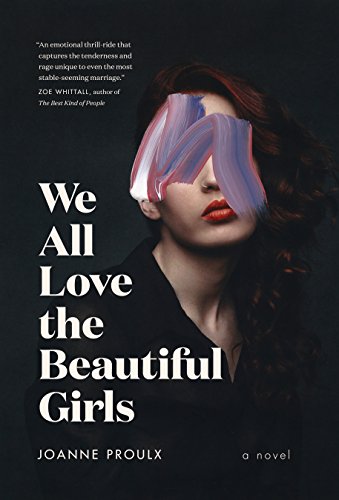
I just finished reading a novel called We All Love the Beautiful Girls. It's Canadian literary fiction by Joanne Proulx. I don't think I've ever read a book the year it came out (I'm very behind the times that way), but I found it in a Little Free Library near my house. The title and the cover appealed to me. I'll admit, I thought there would be lesbians. Spoiler Alert: there weren't.

But instead of talking about the book, I'm going to talk about my family. What else is new?

Okay, I lied.  I'm going to talk about this book a bit.  I'm going to tell you about something that happens in the book. Something fantastically Canadian, come to think of it. Something that touches on the story of my family.

A boy passes out in the snow.  He gets frostbite and loses a hand.

Now, here's why this story hits home for me...

My grandma loved her dad. When her parents divorced, she chose to live with him. When my grandmother married, he came to live with her.  I think he slept in her kitchen. I know my uncle slept in a drawer. But this was the late 40s, so I guess people were just sleeping all over the place.

I never met my great-grandfather, but evidence suggests he was a kind and caring person. He came here from rural Scotland, where he'd been a farmer. During the First World War he worked with horses, and when he came to Canada he continued in that vein, working in stables where milkmen kept their teams.

He wasn't much of a drinker, as far as I know, but one New Year's Eve he went down to the pub.  I guess he drank much more than his body was used to, because on his way back he passed out in a snow bank.  He wasn't far from home.  My grandmother tells me the snow bank was right in front of the house.  She's the one who found him there the next morning.

I'm telling you the story of how my great-grandfather died.

But I'm making choices about how I tell it.  I could stop right there.  Everything I've told you is true.  However, the implication is that, when my grandma found her father in the snow on New Year's Day, he was already dead.  That's not the case.  It's the best version of the story of my great-grandfather's death, but it's incomplete.

Because, when my grandmother found her father in the snow, he was still breathing.  They rushed him to hospital, where he died of pneumonia three weeks later. He never got out of that hospital bed.

When we're creating fiction, we're obviously making choices about how we tell a story. But when we're telling the stories of our lives, we're making choices too.

Good storytellers choose the best possible version of that story.

This is a lesson I learned from my aunt, who, I now realize, is the person who taught me how to be a storyteller.  When I was a child, I found her stories spellbinding. Now, as an adult, I still do.

In fact, just this weekend she told us a very evocative tale that drew on every sense. Her siblings all agreed that, the way she'd told it? Yeah, that's not the way it happened. Nowhere near.  There was a consensus that her facts were way off.

But does that matter? To me? I guess it doesn't. It doesn't make a difference whether my uncle came in through the front door or the back.  That doesn't impact the heart of her story, and my aunt's choices add nuance and build strong images.

Would it do an injustice to my great-grandfather if I led you to believe he died in that snowdrift, in the wee small hours of New Year's Day? When, in reality, he died in a hospital bed three weeks later?

That, I can't answer.  It's his death, not mine.

Giselle Renarde is an award-winning queer Canadian writer. Nominated Toronto’s Best Author in NOW Magazine’s 2015 Readers’ Choice Awards, her fiction has appeared in nearly 200 short story anthologies. Giselle's juicy novels include Anonymous, In Shadow, Seven Kisses, and The Other Side of Ruth.

Thursday, January 19, 2017

Who Wrote This?

by Giselle Renarde


When the "What Are You Reading?" topic comes up, I usually I tell you about a book I'm enjoying. Today I'm going to tell you about a book I abandoned, which is much more fun.

Last year I might have mentioned reading V.C. Andrews for the first time and being shocked. I might also have told you about being in the younger cohort of a Grade 5/6 split. That wasn't last year--that was closer to the heyday of V.C. Andrews' fame. All the Grade 6 girls were reading Flowers in the Attic. They went through V.C. Andrews books like you wouldn't believe.

So last year, when I picked up an old V.C. Andrews and found it culminated in incestuous child rape, I couldn't believe this is what the kids in my class were reading back in the day.

That said, when I spotted another V.C. Andrews novel in the library, I didn't exactly walk on by.

Something got me curious, though. The dedication to this book reads: For Gene Andrews, who so wanted to keep his sister's work alive.

That's a weird dedication.

So I read the fine print on the copyright page and found this:

Following the death of Virginia Andrews, the Andrews family worked with a carefully selected writer to organize and complete Virginia Andrews's stories and to create additional novels, of which this is one, inspired by her storytelling genius.

Things that make you go hmmm, am I right?

Maybe this is all common knowledge. V.C. Andrews died in 1986. But it's news to me because apparently I'm 30 years behind the times.

I gave this book a chance (it's called Sage's Eyes, if you're curious) because the blurb seemed intriguing. I hate giving up on a book, so I worked my way through half of it before deciding life's too short. This novel is repetitive as fuck and focuses on minutia that might possibly be interesting to preteens but not to adult readers. The characters are supposed to be contemporary teenagers but they all talk like it's the 50s--the 1850s. heh

Anyway, tastes vary. I don't want to yuck anyone's yum. But it did get me thinking about author estate planning and literary wills.

As an author, do you care what's written in your name after you die? Do you want someone else to pick up where you left off? Complete your works in progress? Do you want your devoted readers picking up a book by someone else and thinking it's by you?

Maybe you don't care. After all, you'll be dead. But if you're beginning to wonder what measures you should be taking now to protect your interests after your death, have a listen to this episode of The Creative Penn: What Happens When An Author Dies. Estate Planning With Kathryn Goldman.

It's a start.


Giselle Renarde is an award-winning queer Canadian writer. Nominated Toronto’s Best Author in NOW Magazine’s 2015 Readers’ Choice Awards, her fiction has appeared in nearly 200 short story anthologies, including prestigious collections like Best Lesbian Romance, Best Women’s Erotica, and the Lambda Award-winning collection Take Me There, edited by Tristan Taormino. Giselle's juicy novels include Anonymous, In Shadow, Seven Kisses, and The Other Side of Ruth.

Tuesday, January 17, 2017

Reading Through The Slush (#amreading #erotica #eroticromance)

As mentioned before, I've recently started up an erotica and erotic romance publishing company. As such, a lot of my reading of late has been the slush pile.

(However, for those keeping track of how geeky I am, I recently finished Star Trek: Prey: Book Two: The Jackal's Trick and I'm currently reading Star Trek: Prey: Book Three: The Hall of Heroes. I'm also working on Abaddon's Gate, book three of The Expanse.)

Reading through the slush has been interesting. We've received a wide variety of stories -- everything from MF to FF and MM, as well as BDSM, FemDom, comedic horror, historical, fantasy, and more. Taking the lead from our acquisitions editor, I've started to develop a sense of how to tell if a story is good, even if the writing needs some work.

It can be tempting to accept everything that's sent our way, to see the good in everything -- after all, I hate to be someone that says "no" to something and I like to give everyone a chance. But this is a business and we need to make some tough choices.

Sometimes it's an obvious "yes," like when the writing is phenomenal, the synopsis is gripping, and the sex scenes ooze with eroticism. Other times, it's a little tougher. The writing may be a little rough around the edges and the execution may need a little work, but at its core, the story is strong and the voice is unique. (That was my toughest lesson, seeing the hidden gems.) And still other times, it can be difficult -- I might love a story idea and the attitude of the author, but the writing just doesn't do it for me. There have been a few times where I've been excited to read an authors pages, only to soon be let down. Very rarely is something a flat-out "no" right from reading the query letter.

Now that this business is in full swing, I'm reading more than ever, but barely managing time to write. I read the query letters everyone sends and I read at least the first few paragraphs of every submission. But after a book has been through the editors, I read everything before we publish it. Right now, we're doing mostly short stories and novellas, but we will be including some novels and longer fiction in the near future. That's a lot of time spent reading that I used to spend writing.

While I could complain that with less time to write, I'm doing less of what I wish I could do more of, I've found reading submissions and publishing books to be very educational. I'm a person who never stops learning and so to see how other authors are approaching their craft and studying how other authors portray their sex scenes, I suspect that I'll be a stronger writer in the near future.

Only a few years ago, I read over 70 books in one year. This year, excluding the books I'll read as part of the publishing process, I'll likely reach only a dozen or so. I suspect I'll also be reading fewer erotic books by choice, since most of my "work" reading will be erotic, meaning for the next several "What I'm Reading" posts, you can expect lots of Star Trek, with perhaps the occasional thriller.

(If you're interested, I recently wrote a post on my blog about writing sexy descriptions -- based on my learnings from reading the slush pile.)


Cameron D. James is a writer of gay erotica and M/M erotic romance; his latest release is Erotic Love & Carnal Sins: Confessions of a Priest (co-written with Sandra Claire). He is also the publisher and co-founder of Deep Desires Press, a publisher of erotica and high-heat-level erotic romance. He lives in Canada, is always crushing on Starbucks baristas, and has two rescue cats. To learn more about Cameron, visit http://www.camerondjames.com.

Tuesday, November 8, 2016

What I'm Reading -- Some Good Books, Some Blah Books

I find that I read like I write — I balance multiple books/stories, dipping into each of them when time and interest allows.  I’m currently writing six books/stories for various pen names, with another seven in the pre-writing stage.  Similarly with reading, I’m in the middle of three books right now (and I had taken a break from these to read a fourth book last week).

Might as well start this off the same way I start off every “What I’m Reading” post.  Yep, I’m reading a Star Trek book.  This time, it’s Star Trek: Prey: Book 1: Hell’s Heart by John Jackson Miller.  It’s okay.  It’s Klingon-focussed and I seem to be one of the few Star Trek fans that’s never really liked the Klingon storylines.  Miller’s writing ability is far superior in this book compared to his previous Star Trek book, but overall it's fairly decent.  I'm having a little trouble keeping all the Klingon names straight as half of them start with K.

The second book I’m reading is Abaddon’s Gate by James S.A. Corey, which is the third book in The Expanse series.  (This is the book series that The Expanse tv series is based on.)  The Expanse is planned as a nine-book epic and what I particularly enjoy about it is that each book seems to be greatly different than the one before it — so the reader doesn’t get much of the same-old-same-old feeling that can come with some ongoing series.

In The Expanse, an alien protomolecule from who-knows-where has started infecting humanity and doing strange things.  Book one (Leviathan Wakes) featured the protomolecule seemingly breaking down human bodies and reshaping the organic matter for some strange purpose.  Book two (Caliban’s War) was about how a company was trying to use the protomolecule to create supersoldiers, while the on Venus, the protomolecule was reshaping the inorganic material on the planet for some strange purpose.  In Abbadon’s Gate, the work that the protomolecule had undertaken on Venus led to the creation of a “ring” that it launched and set in place in the outer solar system.  The ring leads somewhere, but that hasn’t yet been revealed to me.  (The characters are all travelling to the ring right now.)

Corey writes engaging chapters that are nicely-sized.  I generally read a chapter a day before bed.  What I find particularly interesting about the future that Corey has created is that religion and faith are still very strongly present.  In most sci-fi stories, humanity has mostly become atheist, with religion only showing up as either a human cult or the backwards practices of a primitive alien culture.  So, to read how faith is navigating the future has been an interesting journey.

For the third book, I felt a strange need to pick up a hetero romance from the grocery store.  I’m reading Lycan Unleashed by Shannon Curtis (which is bundled with The Immortal’s Hunger by Kelli Ireland).  It’s okay so far.  I'm only a few chapters in.  As I’m reading it, I get the feeling that this is a sequel to a previous story, but the “other books by” list indicates this is Curtis’s first publication with Harlequin.  It’s pretty decent so far.  In retrospect, I probably shouldn’t have picked up a werewolf romance if I’m not into paranormal stuff.  (But at this grocery store it seemed to be either regency, western, or paranormal — none of which really caught my interest.)  Plus, I was taken by the cover model.

And I mentioned that last week I paused these three books to read another.  I had a quick read through Frances Caballo’s very short ebook The Author's Guide to Goodreads.  I was hoping to learn something I didn’t already know, but it was essentially a primer to Goodreads and didn’t go too in depth.  Might be helpful for some, but wasn’t anything new to me.


Cameron D. James is a writer of gay erotica and M/M erotic romance; his latest release is Seduced by My Best Friend’s Dad (co-written with Sandra Claire). He is also the publisher and co-founder of Deep Desires Press  a publisher of erotica and high-heat-level erotic romance. He lives in Canada, is always crushing on Starbucks baristas, and has two rescue cats. To learn more about Cameron, visit http://www.camerondjames.com.

Tuesday, June 21, 2016

Reading About Reading

I'm such a slow reader this year. At this time in 2015, I'd read about 30 books. My year-to-date count is about eight. Meh, at least I'm using my non-reading time productively and not just sitting around beating off. ;)

I'm presently reading two books. One of them, of course, is my standard indulgent of my Trekkie side. The Star Trek book I'm presently reading is Star Trek: Voyager: A Pocket Full of Lies by Kirsten Beyer. This is one of those books that takes place after the TV series, so it goes in a lot of unexpected places. However, I don't think there are many Star Trek fans reading this, so I'll move onto something a little more interesting.

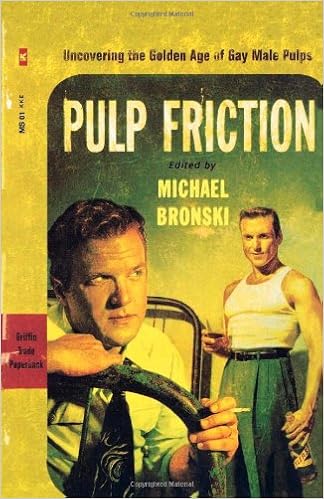
The other book I've started is Pulp Friction, edited by Michael Bronski.

Here's the blurb:
Long before the rise of the modern gay movement, an unnoticed literary revolution was occurring, mostly between the covers of cheaply produced pulp. Cultural critic Michael Bronski collects a sampling of these now little-known gay erotic writings -- some by writers long forgotten, some never known, and a few now famous. Through them, Bronski challenges many long-held views of American postwar fiction and the rise of gay literature, as well as of the culture at large. Pulp Friction is a fun, entertaining anthology and an enlightening, groundbreaking work.

I've literally only read the introduction so far, which gives a general overview of Bronski's research in compiling this book. From here on in, it looks like it's broken into smaller thematic sections that each have their own mini-intro, and then there are sizeable excerpts from gay pulp novels.

However, I'm already fascinated.

In my day job, I work in an LGBT centre that has a large library of LGBT books.  I've been told by a few people in the know -- and it's something Bronski acknowledges -- that back in the day when gay and lesbian literature was considered obscene, writers were forced to give their books an unhappy ending. To make their books enticing and erotic to LGBT readers, the writers would write a romantic and erotic book exactly the way they wanted, then tack on an ending chapter where it all goes wrong and everything is destroyed. This would be acceptable for censorship laws, and LGBT readers would know to stop reading at a certain page (at the true ending, not the actual ending of the book) to get the story they wanted.

Bronski, in reading hundreds of books in researching for this anthology, found that to be actually an atypical practice. Yes, it happened, but it was nowhere near as common as we are led to believe. (That being said, he focussed much more on gay literature, and I've been told that bad ending thing is common in older lesbian literature. However, if I recall correctly, Bronski read some lesbian books and came to the same conclusion as he did with the gay books.)

So why do we have this perception that all gay and lesbian literature was forced to have a bad ending when, in fact, that's not true? As a writer, I found Bronski's explanation rather depressing. Bronski believes it's because most literature is forgotten shortly after it's out of print -- and, culturally, we just remember a few of the more significant books.

This isn't the case only with LGBT books, but also with general books. If you were to look at a bestseller list from ten years ago, how many of the books would you remember? What about a bestseller list from fifty years ago?

As a society, we have remembered a few pieces of literature and largely forgotten the rest. Thus, I assume, we have remembered the books that all had a bad ending because, presumably, they stick out more in our collective memory. (Are you more likely to remember the steamy read that was great from start to finish or the steamy read that is perfect if, and only if, you stop reading at page 237? Because of remembering the page number, that's probably the book you'll remember.)

I mentioned it's a bit of a depressing fact as a writer -- because this implies that after I pull my stuff from print, or perhaps even long before that, I'll be forgotten. Sure, they'll be a few people who remember my works (I have a super-fan on Twitter that probably won't forget me anytime soon), but for the most part, I'm forgettable. We all are.

At first that was super depressing, but then I realized why I write. I don't write to be remembered. I certainly don't write because I feel I have an important message that will be contemplated for generations to come. I write because I want to entertain. I write because I have stories in my head that will eat at me until I start to type them out.

I don't write for fame and fortune, though I would not refuse either if they were to come my way. I write to allow someone to dive into a story and escape their world, even if only for fifteen minutes a night. If I'm forgotten in ten or twenty years, that doesn't really change what I'm doing right now.

Maybe one day I'll turn up in an anthology like this one, exploring the best of forgotten erotic literature.

:)


Cameron D. James is a writer of gay erotica and M/M erotic romance; his latest release is Seduced by My Best Friend’s Dad (co-written with Sandra Claire). He lives in Canada, is always crushing on Starbucks baristas, and has two rescue cats. To learn more about Cameron, visit http://www.camerondjames.com.

Tuesday, April 12, 2016

What I'm Reading Now

I've been such a slow reader so far this year!

On average, I've been reading 65 books per year for the past three years -- but it seems I have little time for reading in 2016!

Since my last post about reading here on OGAG!, I only just recently finished those books. (They were mostly okay.)

This time around, I've got four books on the go. One of them is a beta read of an epic fantasy novel written by a friend of mine (but a different one than the one I was reading last time). The remaining three books are:

Star Trek: Deep Space Nine: Ascendance by David R George III

As I mentioned last time, I'm a huge Star Trek nut. Ascendance continues the plot of Deep Space Nine past the end of the TV series. All of the Star Trek book series have continued on beyond the end of the TV series now, sometimes making drastic changes through collaborative efforts among the Trek authors, or crossing over or tying together different series. No one does it better than David R George III, though. He just gets Deep Space Nine like no one else does and his books are better than any of the shows and better than all the other books.


Tie Me Up! by Stephan Niederwieser


Niederwieser has written a few non-fiction books on gay sex that I've read. I like his casual style and to-the-point writing.

Tie Me Up! is about, well, tying people up. Like many erotica writers, I've got a few different pen names, tackling slightly different smut. It's really through sheer coincidence that all three of my pen names are tackling various forms of BDSM very soon! Some will be more hardcore BDSM than others and some will be more formal/strict about BDSM life than others. For one of my pen names, the BDSM will be as accurate as possible and involve a lot of rope work, so this book is helping me get the terms correct and helping me better understand the effects of bondage on the sub.

Now to find a nubile twink to practice this on...


Starting & Running a Small Business For Canadians All-in-One For Dummies

I'm partnering with a couple other people to create an e-publisher of M/M erotic romance and gay erotica. While a lot of people in the industry self-publish, there are also a lot that either find themselves unable to do it on their own or not wanting to be responsible for all the steps. Personally, I love the publishing process, perhaps even more than the writing process. I'm teaming up with a handful of excellent editors and a couple people with experience with graphics work -- and together we're working on creating a professional and comprehensive publishing company. It'll still be a few months before we're open for submissions, though.

I'm somewhat envious of the ease of creating a limited liability corporation in the USA (based on what I've read in erotica forums). Up here in Canada, the process is both expensive and complicated, hence why I'm reading this manual. The company is currently in the hands of my lawyer, who is registering our company name and drafting our Articles of Incorporation. From there, there's a ton more paperwork and I'll have to hire an accountant to set up the financial system and complete more paperwork.

Two thirds of this 600-page book, which is how far I'm into it, is about setting up the business (and the remaining third is HR and marketing) and this still doesn't explain everything I need to know. This week I'm at a three-day business start-up workshop that I hope will explain the rest of it (or at least a little bit more).

So that's what I'm reading! After I finish these, I think I'll be diving into a bunch of sci-fi, so the next reading post might be a little less business-y. :)


Cameron D. James is a writer of gay erotica and M/M erotic romance; his latest release is Seduced by My Best Friend’s Dad (co-written with Sandra Claire). He lives in Canada, is always crushing on Starbucks baristas, and has two rescue cats. To learn more about Cameron, visit http://www.camerondjames.com.

Thursday, February 4, 2016

I'm a Book Snob (or What I'm Not Reading)

by Giselle Renarde

A book snob is not a popular thing to be when you write genre fiction.

In fact, there are a lot of things you're not supposed to admit when you're a genre fiction writer. I write erotica but I don't read it. (Don't tell people stuff like that!) I've never read a romance novel. (Don't!) A lot of genre fiction, even the bestselling stuff, is surprisingly poorly written. (Don't say it!)

At the start of my career, I used to wonder why established authors would say inflammatory things. Didn't they care about their reputations?

Ten years into my writing life, I kinda get it. You get tired of saying all the right things. It's boring.

So here I am, saying all the wrong things.

I love literary fiction. I just finished All My Puny Sorrows by Miriam Toews and it knocked my socks off. Her writing style is is so unique, and the way she approaches difficult subject matter is spellbinding. This book is written with divinely humorous compassion, but the writing isn't lofty. It's not even particularly pretty. But this is a book that had me laughing and crying simultaneously. I am so in awe of Miriam Toews. I am so in awe of her work.

My girlfriend bought me another book while I was reading All My Puny Sorrows.

We were at my local library, looking at the shelf of books they were selling off, and she spotted a thriller she'd read and enjoyed. It was a #1 bestselling book by a #1 bestselling author. So she bought it for me, and we were both excited to share something. We really don't read the same books. She likes Nora Roberts, Stephen King. I'm into Canadian litfic. We both like autobiographies, but she goes for celebrities and I go for random queer people.

I started the thriller Sweet had enjoyed so much, and from the first page it sparked my editor brain.

That's never a good sign.

I had trouble paying attention to the story because I was too focused on awkward sentence structure and crappy word choices. It reminded me of the first revision I submitted on my first ebook. My editor (bless her heart--my book was certainly a challenge!) told me I needed to vary my sentence structure. There was too much. "She did this. She did that. She did some other thing." So I tried to mix it up like "Doing this, she did that" and what a disaster!

I could feel my editor cursing me under her breath as she wrote, "Pushing down her skirt, she pulled up her top? How can she be pulling up her top and pushing down her skirt simultaneously?" 

That's how I felt reading this bestselling thriller. I couldn't look beyond the messy language use to focus on the story.

There were things I appreciated about it. Chapters were short, which made me feel like a fast reader (which I'm not), and each chapter ended in some moment of "Gasp! What's going to happen next?" I always wanted to know right away, so I'd flip the page and read the start of the next chapter, then get swamped down by my editor brain evaluating the language.

I gave up after 54 pages. Maybe I'll go back, but probably not.  It reminded me of the kind of action/adventury crime show I might put on TV and half watch and half enjoy, but when I sit down to read words, the words themselves matter. The order of those words matters.

Now, I don't want anyone thinking I'm saying thrillers are universally BAD or that my taste in fiction is superior to anyone else's. Everybody's got different tastes. And that's great because it leaves room for authors to find a niche. There is a reader for every writer.

I read literary fiction because I like it. It appeals to me. There are terrible litfic books, just like there are terrible books in every genre. Did I ever blog about The Postmistress? Because that book was awful (not that I finished it). But lots of people liked it, so there you go: tastes differ.

So are there good books and bad books? Or are there just books we like and books we don't like?

Tuesday, February 2, 2016

What I'm Reading

The fun of a "What I'm Reading" topic is that we get glimpses into other people's interests and reading habits.  The downer is that I get exposed as a nerd.

So, let's get the nerd stuff out first!  I'm currently reading four books, the first of which is an epic fantasy novel that a friend has written -- I'm one of his beta readers.  It's really good.  :)

But perhaps the bigger nerd sign hanging over me is the fact that I'm such a Star Trek nerd that I read the books!  Book two that I'm reading this month is Star Trek: Mirror Universe: Rise Like Lions by David Mack.  Even a casual Star Trek fan might remember the episode in the original series where Kirk travelled to a parallel universe and Spock had a beard... right?  Anyway, that parallel universe -- the mirror universe -- has been a fascination of Trek fans for decades, so this is one of a handful of books that explore that universe.

Now, let's move away from the nerdy and toward the sexy.  :)

I've currently got two gay erotica novels on the go.

The first is Two Bottoms in the Ninth by Zavo.

Here's the blurb:

Rich with historical detail, this novel charts the erotic story of two men with a passion for baseball—and each other. 

Suspicion starts to mount when someone begins fixing the games, and the question ultimately becomes: what game are they playing with each other? Get ready as the game that often mixes sex and scandal goes into extra innings and there is no telling who will come out on top.

So far, I find the book... well... it's okay.  I was hoping for something a little steamier, something like the non-stop baseball-themed raunch-fest that is Hardball by T. Hitman, which I read a couple years ago and reviewed on my personal blog.

I don't have the book on me right now and can't remember the characters' names... so I guess that tells you how captivated by it I am.  However, what I've come to really enjoy about gay erotica versus M/M erotica is the sheer casualness toward sex.  In general, in gay erotica, if the characters think they want to fuck, they go ahead and fuck.  In general, in M/M erotica, if the characters want to fuck, authors tend to make explicit mention of the usage of a condom, the tenderness of gestures, the intimacy of the moment, and so on.  Sometimes I want a loving and erotic connection, but other times I just want to read about two guys fucking like beasts in the forest.

(Since this novel is set in a "historical" period, AKA pre-HIV, there's no mention of condoms.  In gay erotica, you often won't find mention of condoms or, if you do, it'll be a passing reference and you assume that the characters are being responsible.  In far too many M/M erotica and M/M erotic romance books, I see long-winded dialogue about how using a condom is a sign of respect and love for both partners and they'll use condoms until they both get tested and blah blah blah.  I personally feel that people in real life should use condoms unless they are sure that everyone is of the same status; but I don't need to read a safe-sex lecture in a book I'm reading for pleasure.  Sorry.  That's an ongoing rant of mine.)

Anyway, moving on...

The second erotica novel I'm reading is Bike Cop by Gordon Hoban.

Here's the blurb (which is essentially a two-line excerpt from the book):

"He loved those boots. Though he never admitted it to anyone, those boots were early fuel to his drive to enter the Police Academy."

A while back I discovered that my local LGBT library has a LOT of older erotica, and I've had a blast reading through some of it because those books contain sexual content that you won't find in modern erotica.  At least, not in professionally published modern erotica.  (You might find some of this content in self-published stuff.)

The shelves of the erotica section are filled with dubious consent (which is what this book seems to be so far), non-consent, watersports, scat, heavy BDSM, and leather (which is also what this book is about).  While these older erotica titles sometimes make me squeamish at times (like when I read Punk Chicken), I find them completely entrancing because it's so different compared to the erotica that's published today.

Anyway, back to Bike Cop.  I'm only part-way through, but the main character, a younger guy who just got his first car, is pulled over for speeding and taken into the woods by a cop clad in leather.  They have hot dub-con sex, which sparks the young man's intense fixation on leather (because the cop had shiny leather boots)... leading him to become a leather-clad motorcycle cop.  That's as far as I've read.  I'm expecting a lot of hot leather-themed sex.

So... that's what I'm reading right now!

I used to read quite rapidly, averaging 60-70 books per year.  However, I know that this year will be a lot slower, as I've got a lot less time on my hands due to an overwhelming amount of projects that demand my time.  I'm hoping that I'll be reading something different the next time this topic comes up.  ;)


Cameron D. James is a writer of gay erotica and M/M erotic romance; his latest release is Seduced by My Best Friend’s Dad (co-written with Sandra Claire). He lives in Canada, is always crushing on Starbucks baristas, and has two rescue cats. To learn more about Cameron, visit http://www.camerondjames.com.